
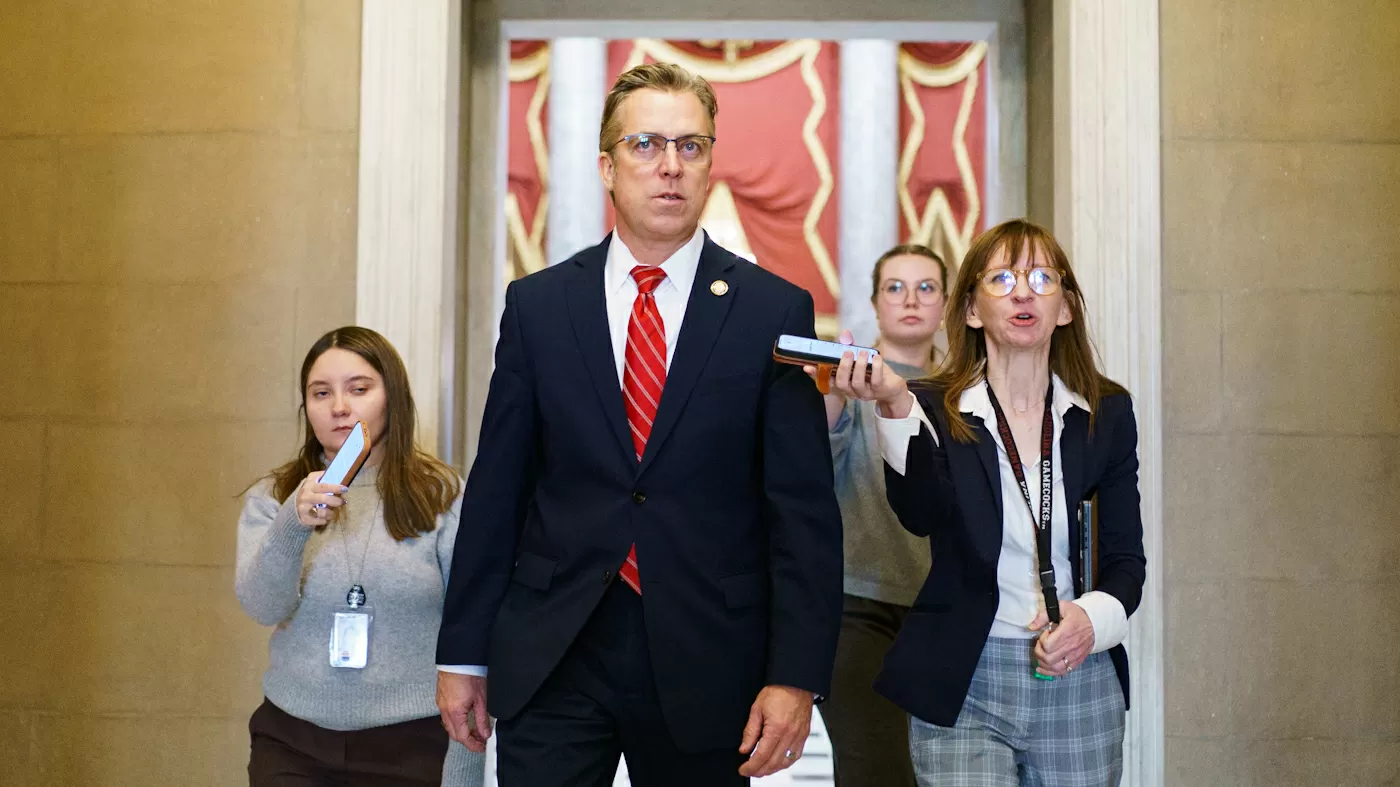
House lawmakers returned to Washington this week after a long break, but instead of easing back into their duties, they were met with a war of theologies in the Middle East – and another brewing within the walls of the Capitol. President Trump’s recent actions against Iran’s Islamic regime have heightened national religious tensions, which are now spilling over into a partisan holy war over national identity.
The conflict between the United States and Iran has been ongoing for decades, but it has reached a critical point in recent months. The Trump administration’s decision to withdraw from the Iran nuclear deal and impose harsh sanctions on the country has only escalated the situation. This has led to a dangerous game of brinkmanship between the two nations, with both sides flexing their military muscles and engaging in heated rhetoric.
However, what is often overlooked in this political power struggle is the impact it is having on the people of both countries. The Iranian people, who have been suffering under the weight of economic sanctions, are now facing the threat of war. And here in the United States, the Iranian-American community is feeling the effects of rising tensions and anti-Iranian sentiment.
But perhaps the most concerning aspect of this conflict is the way it is being framed as a religious war. President Trump’s rhetoric has often demonized the Islamic religion, painting it as a threat to American values and national security. This has only served to fuel the flames of religious intolerance and division within our own country.
On Capitol Hill, this religious divide has manifested itself in a partisan battle over national identity. Democrats and Republicans are using this conflict to further their own political agendas, rather than working together to find a peaceful resolution. This has led to a toxic atmosphere where religious beliefs are being used as a weapon to attack opponents and gain political points.
But this is not what our country stands for. The United States was founded on the principles of religious freedom and tolerance. Our diversity is what makes us strong, and we must not let political agendas tear us apart.
It is time for our lawmakers to put aside their differences and come together to find a solution to this crisis. We cannot afford to let religious tensions and political gamesmanship dictate our actions. Instead, we must focus on finding a diplomatic solution that will benefit both nations and promote peace in the region.
Furthermore, it is important for all Americans to remember that the Iranian people are not our enemies. They are a proud and ancient civilization, with a rich culture and history. We must not let the actions of their government cloud our judgment and lead us to discriminate against innocent individuals.
As we navigate through this challenging time, let us remember the words of President John F. Kennedy: “Let us never negotiate out of fear. But let us never fear to negotiate.” We must have the courage to engage in dialogue and find common ground, rather than resorting to fear and aggression.
In the midst of this war of theologies, it is crucial for us to stay united as a nation. We must reject any attempts to divide us based on religion or political affiliation. Instead, let us come together in the spirit of unity and work towards a peaceful resolution to this crisis.
In conclusion, the current conflict between the United States and Iran is not just a political or military issue – it is a battle of ideologies and a test of our values as a nation. We must rise above religious intolerance and partisan politics and work towards a peaceful resolution. Let us not forget that we are all Americans, and it is our duty to stand together in the face of adversity.
