
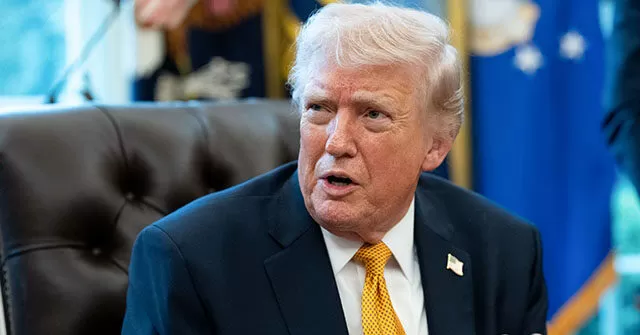
In a recent interview, President Donald Trump made a bold statement, declaring that he does not want war and that he wants “wars less than almost anybody.” This statement comes amidst rising tensions between the United States and Iran, with many fearing the possibility of a military conflict between the two nations.
President Trump’s words may come as a surprise to some, given his reputation as a tough and uncompromising leader. However, his stance on war is not a new one. Throughout his presidency, Trump has consistently expressed his desire to avoid military conflicts and instead focus on diplomacy and negotiation.
In the interview, Trump also made it clear that his aversion to war is not just limited to Iran, but to any conflict in general. He stated, “I don’t want to fight wars. I want to win wars. And we’re going to win, we’re going to win big, but I don’t want to be in wars.” This sentiment reflects his belief that war should always be a last resort and that every effort should be made to find peaceful solutions.
Despite his strong stance against war, President Trump did not shy away from criticizing Iran’s leadership, calling them “violent vicious people.” This is not the first time he has spoken out against the Iranian regime, which he has accused of supporting terrorism and destabilizing the Middle East. However, Trump’s criticism of the leadership does not necessarily mean he wants to go to war with Iran. In fact, he has repeatedly stated that he is open to negotiations with the country.
It is important to note that President Trump’s desire for peace does not mean he is weak or unwilling to defend the interests of the United States. In fact, he has taken a strong stance on issues such as trade and national security, often using tough rhetoric to convey his message. However, when it comes to war, Trump believes that the cost and consequences are too high and that every effort should be made to avoid it.
The President’s statement has been met with mixed reactions, with some praising his commitment to peace and others questioning the sincerity of his words. However, one thing is clear – Trump’s stance on war is a refreshing change from the previous administrations, which have been criticized for their interventionist foreign policies.
In the past, the United States has been involved in numerous wars and conflicts, often with disastrous consequences. The current situation with Iran has sparked fears of another potential war, but President Trump’s words offer a glimmer of hope that this can be avoided.
It is also worth noting that Trump’s stance on war is not just limited to his words. He has taken concrete actions to reduce the country’s involvement in conflicts, such as withdrawing troops from Syria and Afghanistan. This shows that his desire for peace is not just empty rhetoric, but a genuine belief that war should be avoided whenever possible.
In conclusion, President Donald Trump’s statement that he does not want war and wants “wars less than almost anybody” is a positive and encouraging message. It reflects his commitment to finding peaceful solutions to conflicts and his belief that war should always be a last resort. While his critics may question the sincerity of his words, his actions speak louder than words. Let us hope that his desire for peace will prevail and that the world can move towards a more peaceful future.
