
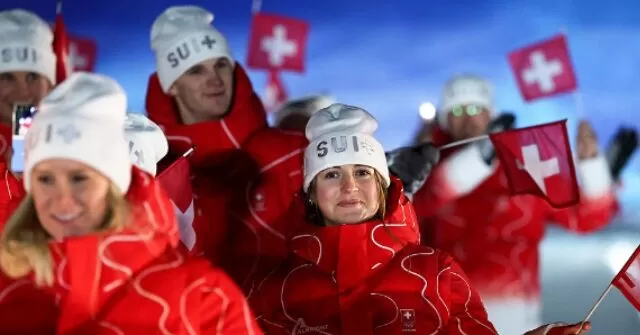
With the Winter Olympics in full swing, all eyes are on the athletes as they compete for the gold. But behind the excitement and thrill of the games, there has been a recent controversy surrounding the lack of diversity on some of the European teams. The Associated Press (AP) has accused several nations of having “overwhelmingly white” teams, sparking discussions around the importance of diversity and representation in sports.
In a recent article, the AP highlighted the lack of racial diversity in the teams from various European countries. The outlet pointed out that while these nations boast of being welcoming and diverse, their Winter Olympics teams do not reflect this diversity. This is particularly evident in the team rosters for skiing and snowboarding events, where the overwhelming majority of athletes are white.
The lack of diversity in European Winter Olympics teams is not a new issue. It has been a topic of discussion for many years now, but with the global focus on racial justice and equality, it has become more pressing than ever before. The AP’s report has only added fuel to the fire and has raised questions about the efforts being made towards promoting diversity in sports.
One of the main arguments put forward by the AP is the lack of representation for minorities in winter sports in Europe. As the article points out, many athletes from Africa and other regions have migrated to Europe and have made it their home. However, the lack of opportunities and support for these athletes in winter sports has resulted in a significant barrier to their participation in the Winter Olympics.
Moreover, the article sheds light on the impact of this lack of diversity on young aspiring athletes from minority communities. When they see that the top athletes in winter sports are mostly white, it can be discouraging for them to pursue their dreams in these sports. This perpetuates the cycle of underrepresentation and makes it even more challenging for minority athletes to break into the sport.
The AP’s report has also sparked conversations about the underlying issues of systemic racism and discrimination in the world of winter sports. While Europe prides itself on being a diverse and inclusive continent, the lack of representation in their Winter Olympics teams illustrates the deep-rooted inequalities that still exist in the sporting world. It is a wake-up call for these nations to address these issues and take concrete steps towards promoting diversity in all aspects of sports.
However, amidst all the criticism, it is essential to acknowledge some of the positive steps that have been taken towards promoting diversity in winter sports. The International Olympic Committee (IOC) has been actively advocating for diversity and inclusion in sports, and their efforts have seen some success. The 2022 Winter Olympics in Beijing, China, will have a record number of female athletes participating, which is a significant step towards gender equality. The IOC has also introduced initiatives to support athletes from minority communities, providing them with better opportunities to compete at the highest level.
Furthermore, there have been some heartening stories of athletes breaking stereotypes and barriers to become successful in winter sports. Take, for instance, Nigeria’s women’s bobsled team, who made history by becoming the first African team to qualify for the Winter Olympics in 2018. Their journey has inspired many young girls from minority communities to take up winter sports and dream big.
In conclusion, the AP’s report has shed light on an issue that needs immediate attention. The lack of diversity in European Winter Olympics teams is a glaring reminder that there is still much work to be done towards achieving equality and inclusion in sports. It is time for these nations to take proactive measures to promote diversity and provide equal opportunities for all athletes, regardless of their race or background. Let the Winter Olympics be a celebration of diversity and a platform for athletes from all backgrounds to shine.
