
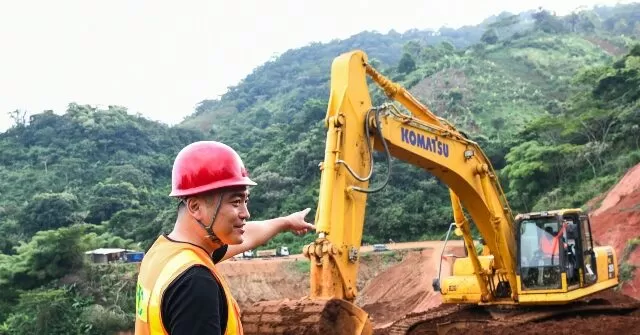
China’s Belt and Road Initiative (BRI) has been hailed as a game-changer for the African continent, promising to bring much-needed infrastructure and economic development to the region. However, recent reports suggest that the BRI may not be living up to its promises, as new loans for infrastructure projects are down by over 50 percent and African countries are now facing a growing debt burden to Chinese banks.
The BRI, launched in 2013 by Chinese President Xi Jinping, is a massive infrastructure and investment project that aims to connect Asia, Europe, and Africa through a network of roads, railways, ports, and other infrastructure projects. It has been touted as a win-win for both China and participating countries, with China gaining access to new markets and resources, and African countries receiving much-needed investment and development.
But as the BRI enters its sixth year, concerns are mounting about the true intentions behind China’s investments in Africa. The recent decline in new loans for infrastructure projects is a cause for alarm, as it suggests that China may be scaling back its investments in the region. In fact, according to a report by the China-Africa Research Initiative at Johns Hopkins University, new loans for infrastructure projects in Africa have dropped from an average of $13.4 billion per year in 2016-2017 to just $5.4 billion in 2018.
This decline in new loans can be attributed to a number of factors. First and foremost, China is facing its own economic challenges, with slowing growth and mounting debt. As a result, Beijing is becoming more cautious about its investments abroad, including in Africa. Additionally, many African countries are struggling to repay their existing loans from China, leading to concerns about debt sustainability and the ability to take on new loans.
But perhaps the most concerning aspect of the BRI is the growing debt burden on African countries. According to a report by the China Africa Research Initiative, African countries owe a total of $145 billion to Chinese lenders, with the majority of the debt being held by the Chinese government and state-owned banks. This is a significant increase from just $10 billion in 2000, highlighting the rapid pace at which African countries are taking on Chinese debt.
This growing debt burden has raised questions about the true intentions of China’s investments in Africa. Critics argue that China is using the BRI as a means to gain political influence and control over African countries, rather than truly promoting development and growth. This is further supported by the fact that many of the infrastructure projects funded by China are not economically viable and have been plagued by corruption and mismanagement.
Furthermore, China’s loans often come with strict conditions, such as using Chinese companies and labor for the projects, which can limit the benefits for local communities and businesses. This has led to accusations of “debt-trap diplomacy,” where China uses its financial leverage to gain political and economic control over African countries.
In light of these concerns, it is imperative that African countries carefully consider the long-term implications of taking on Chinese loans. While the BRI may bring short-term benefits in the form of new infrastructure, the long-term consequences of mounting debt and potential loss of sovereignty must also be taken into account.
However, it is not all doom and gloom for the BRI in Africa. Despite the decline in new loans, China remains Africa’s largest trading partner and a major source of investment. The BRI has also brought much-needed infrastructure to the continent, including new ports, railways, and roads, which have helped to boost economic growth and improve connectivity.
Furthermore, China has taken steps to address some of the concerns surrounding the BRI. In September 2018, President Xi Jinping announced that China would provide $60 billion in funding for African countries, including $15 billion in grants, interest-free loans, and concessional loans. This move was seen as a response to criticism of China’s debt-trap diplomacy and a sign of China’s commitment to promoting sustainable development in Africa.
In conclusion, while the BRI may be facing challenges in Africa, it is still a significant force for development and growth on the continent. However, it is important for African countries to carefully assess the risks and benefits of taking on Chinese loans and to ensure that these investments truly benefit their citizens. China, on the other hand, must also be transparent and accountable in its investments and address concerns about debt sustainability and political influence. Only then can the BRI truly live up to its promises of
