
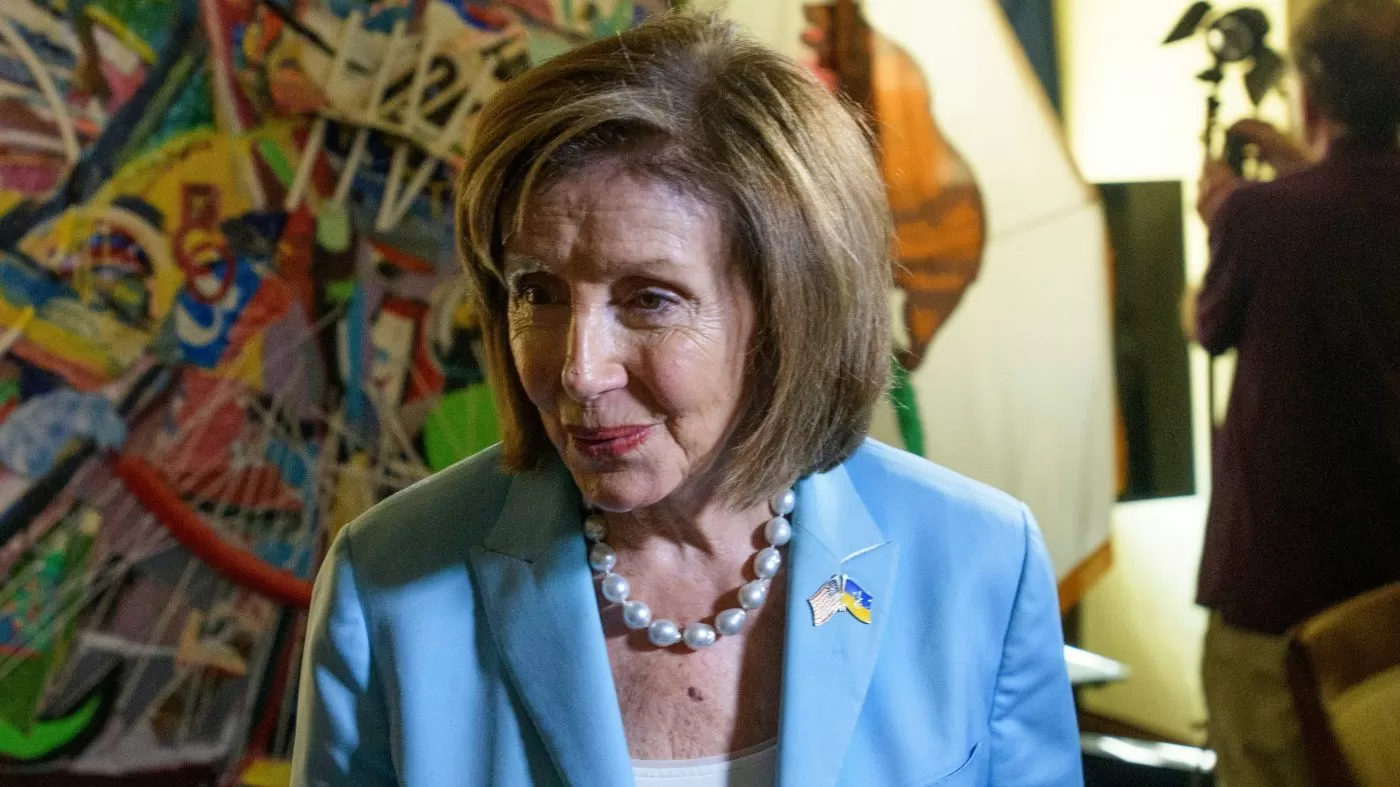
Former House Speaker Nancy Pelosi (D-Calif.) has recently made a bold prediction in an interview with CNN, stating that the United States will have its first female president “within this next generation.” This statement comes after the country has seen two women, Hillary Clinton and Kamala Harris, nominated for the presidency, only to lose to Donald Trump. Pelosi’s words hold a powerful message and raise important questions about the role of women in politics and the lessons to be learned from their past experiences.
The fact that the United States has never had a female president is a glaring reminder of the gender inequality that persists in our society. Despite making up more than half of the population, women are vastly underrepresented in politics, especially at the highest levels. Pelosi’s prediction serves as a beacon of hope for women across the country, who have long been fighting for equal representation in government.
But Pelosi’s optimism is not without reason. In recent years, we have seen a significant increase in the number of women running for political office. In the 2018 midterm elections, a record-breaking 102 women were elected to the House of Representatives, and 25 women were elected to the Senate. This was a historic moment for women in politics, and it showed that the American people are ready for change.
However, Pelosi’s prediction also raises an important question: what is the lesson to be learned from the fact that both women who have been nominated for president, Hillary Clinton and Kamala Harris, lost to Donald Trump? Some may argue that this proves that the country is not ready for a female president. But I believe the lesson here is quite the opposite.
The fact that both Clinton and Harris received millions of votes and came close to winning the presidency shows that there is a strong desire for change and a willingness to break the glass ceiling. It also highlights the fact that women face unique challenges and obstacles in the political arena. From sexist remarks to double standards, women are often subjected to unfair treatment and scrutiny.
But despite these challenges, women continue to persevere and make their mark in politics. Pelosi herself is a testament to this, having become the first female Speaker of the House in 2007 and holding the position for four years. She has been a strong and influential leader, and her prediction is a reflection of her unwavering belief in the capabilities of women in politics.
So, do I believe a woman will be elected president within this next generation? Absolutely. In fact, I believe it will happen sooner rather than later. The growing number of women in politics, combined with the changing attitudes towards gender equality, gives me hope that the United States is ready to break the ultimate glass ceiling.
But it is not enough to simply wait for a woman to be elected president. We must actively work towards creating a more inclusive and equal society. This means encouraging and supporting women to run for political office, addressing the systemic barriers that hold them back, and challenging the sexist attitudes that still exist in our society.
In conclusion, Pelosi’s prediction is a powerful reminder that the United States is on the cusp of a historic moment. It is up to us, as a society, to ensure that this prediction becomes a reality. Let us continue to strive for gender equality in all aspects of our lives, including in the political arena. And when the day comes that a woman is elected as the President of the United States, it will not only be a victory for women but for all of us who believe in a more equal and just world.
