
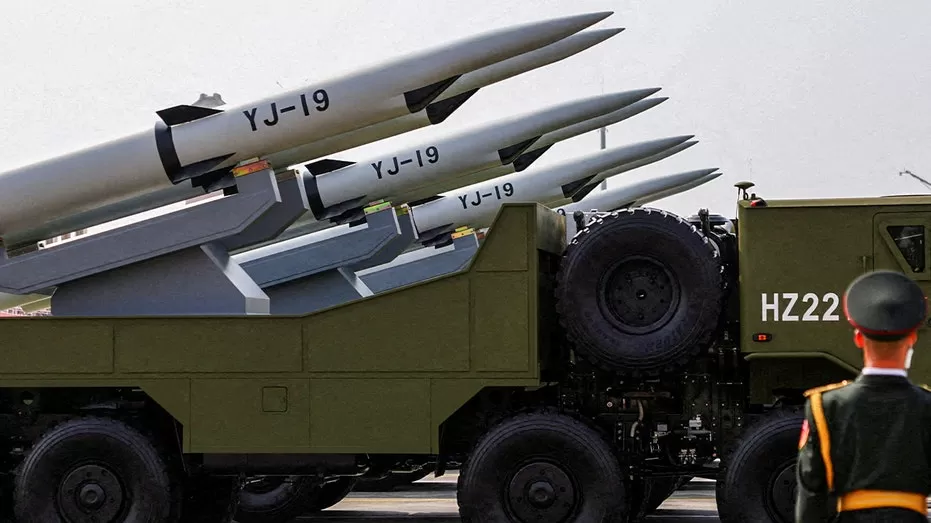
China’s Massive Missile Force: A Growing Threat to U.S. Pacific Bases
In recent years, the world has witnessed a growing strategic competition between two global superpowers – China and the United States. While the rivalry between these two nations has been ongoing for decades, it has now taken on a new dimension with the race to build long-range weapons. China’s massive missile force has become a major concern for the U.S. as it poses a significant threat to its Pacific bases. In this article, we will delve into the details of this strategic competition and analyze the implications it holds for both nations.
China’s Missile Force: A Growing Powerhouse
China’s missile force has been rapidly expanding in recent years, making it one of the largest and most advanced in the world. According to a report by the Pentagon, China has deployed more than 1,250 ground-launched ballistic missiles and ground-launched cruise missiles, with the capability to strike U.S. bases in the Pacific region. This includes the DF-21D and DF-26 missiles, also known as “carrier killers,” which have the ability to target U.S. aircraft carriers, a key component of the U.S. military presence in the region.
Experts believe that China’s missile force is a result of its long-term military modernization efforts. The country has invested heavily in developing advanced missile technology, including hypersonic missiles that can travel at speeds of Mach 5 or higher, making them extremely difficult to intercept. China’s missile force is also equipped with a variety of conventional and nuclear warheads, giving it a significant advantage in terms of both range and destructive capability.
The Threat to U.S. Pacific Bases
China’s growing missile force poses a significant threat to U.S. Pacific bases, which are crucial for projecting American military power in the region. These bases serve as key hubs for U.S. forces, providing logistical support, intelligence gathering, and a launching pad for military operations. With China’s missiles capable of targeting these bases, the U.S. military’s ability to operate in the region could be severely compromised.
Experts warn that China’s missile force could also undermine the U.S. ability to defend its allies in the region, such as Japan and South Korea. In the event of a conflict, China’s missiles could potentially target these countries, making it difficult for the U.S. to come to their aid. This could have serious implications for regional stability and the U.S.’s strategic interests in the Asia-Pacific region.
The U.S. Response: A Race to Build Long-Range Weapons
In response to China’s growing missile force, the U.S. has also been ramping up its efforts to develop long-range weapons. The Pentagon has announced plans to develop a new generation of hypersonic missiles, similar to those being developed by China. The U.S. is also investing in other advanced missile technologies, such as the Long Range Standoff (LRSO) weapon, which is designed to penetrate enemy air defenses and strike targets from a distance.
Experts believe that the U.S.’s response is a clear indication of the growing strategic competition between the two nations. Both countries are investing heavily in developing long-range weapons, with the aim of gaining a military advantage over the other. This arms race could have serious consequences, not only for the two nations involved but also for regional and global security.
The Way Forward: Cooperation and Dialogue
As the U.S. and China continue to race to build long-range weapons, it is important to remember that cooperation and dialogue are key to maintaining peace and stability in the region. Both nations must work towards finding common ground and addressing their concerns through peaceful means. This includes engaging in arms control talks and building trust through military-to-military exchanges.
Moreover, it is crucial for the U.S. and China to understand that their strategic competition should not come at the expense of regional stability. The Asia-Pacific region is home to some of the world’s fastest-growing economies and is a vital hub for global trade. Any conflict or escalation of tensions between the two nations could have far-reaching consequences for the entire world.
In conclusion, China’s massive missile force poses a significant threat to U.S. Pacific bases, and the ongoing race to build long-range weapons between the two nations is a cause for concern. However, it is important to approach this issue with a positive mindset and work towards finding solutions through cooperation and dialogue. Only through mutual understanding and trust can we ensure a
