
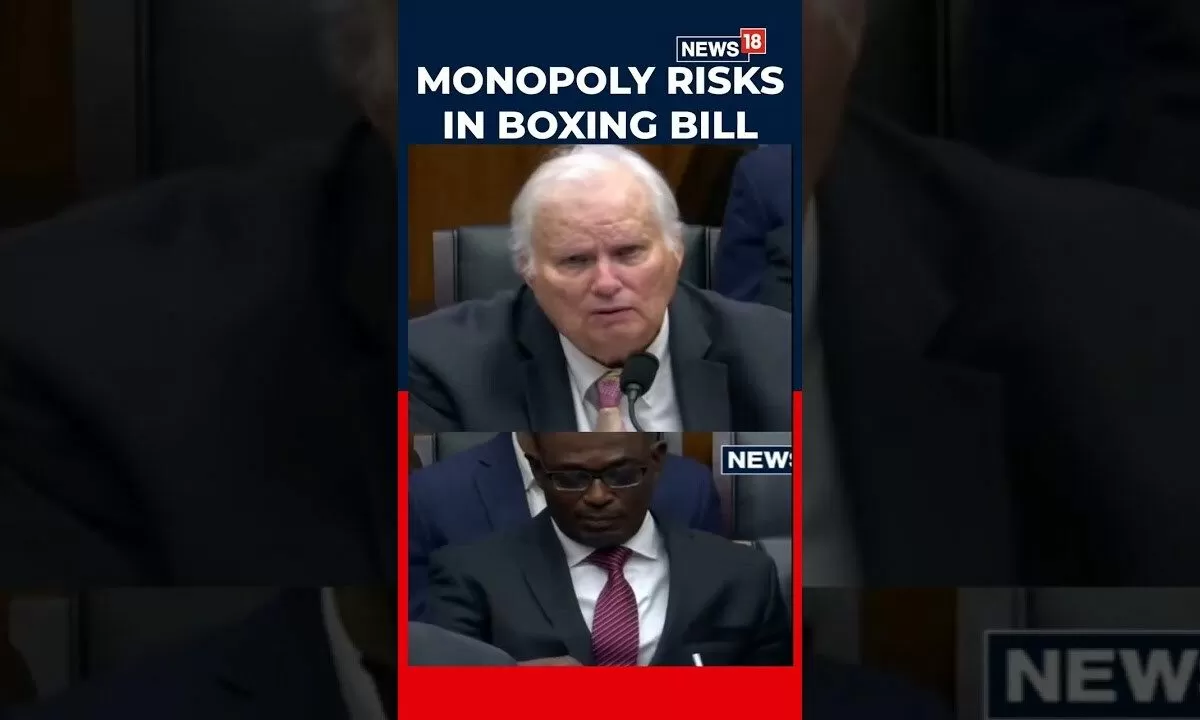
The Muhammad Ali American Boxing Revival Act has been a topic of much debate and discussion in the world of boxing. While many have hailed it as a step towards protecting the rights and welfare of boxers, an unidentified speaker has raised concerns about the potential monopoly power that could be granted to Zuffa through the Unified Boxing Organization (UBO) system.
In a detailed critique of the bill, the speaker warns that the legislation could have serious consequences for the sport of boxing. The UBO system, which is proposed to be the governing body for professional boxing, could give Zuffa a monopoly over the sport. This would not only limit competition but also give Zuffa the power to control the rules and regulations of the sport, potentially leading to unfair advantages for their own fighters.
The speaker also points out that the bill removes crucial firewall provisions that were established by the original Ali Act. These provisions were put in place to prevent promoters from having a financial interest in the management of boxers, ensuring that the best interests of the boxers are always prioritized. However, with the removal of these provisions, there is a possibility that promoters could exploit their fighters for their own financial gain.
Another concern raised by the speaker is the weakening of drug testing reporting standards. The original Ali Act had strict guidelines for drug testing and reporting, but the new bill could potentially make these standards less stringent. This could have serious implications for the safety and well-being of boxers, as well as the integrity of the sport.
The involvement of Lonnie Ali, the widow of the legendary boxer Muhammad Ali, in the promotion of this bill has also been questioned. While her support for the bill is understandable, given her late husband’s legacy, it is important to consider the potential consequences of the bill on the sport of boxing.
In her written testimony provided to Congress, Lonnie Ali emphasized the need for transparency and accountability in the sport of boxing. However, the concerns raised by the unidentified speaker suggest that the bill may not achieve these goals and could instead lead to the opposite.
It is important for Congress to carefully consider these concerns before passing the Muhammad Ali American Boxing Revival Act. While the intention behind the bill may be noble, it is crucial to ensure that it does not have any unintended consequences that could harm the sport of boxing.
In conclusion, the Muhammad Ali American Boxing Revival Act has been met with both praise and criticism. While it aims to protect the rights and welfare of boxers, there are valid concerns about the potential monopoly power it could grant to Zuffa and the weakening of important provisions and standards. It is important for Congress to address these concerns and make necessary amendments to ensure that the bill truly serves its purpose of reviving and safeguarding the sport of boxing.
