
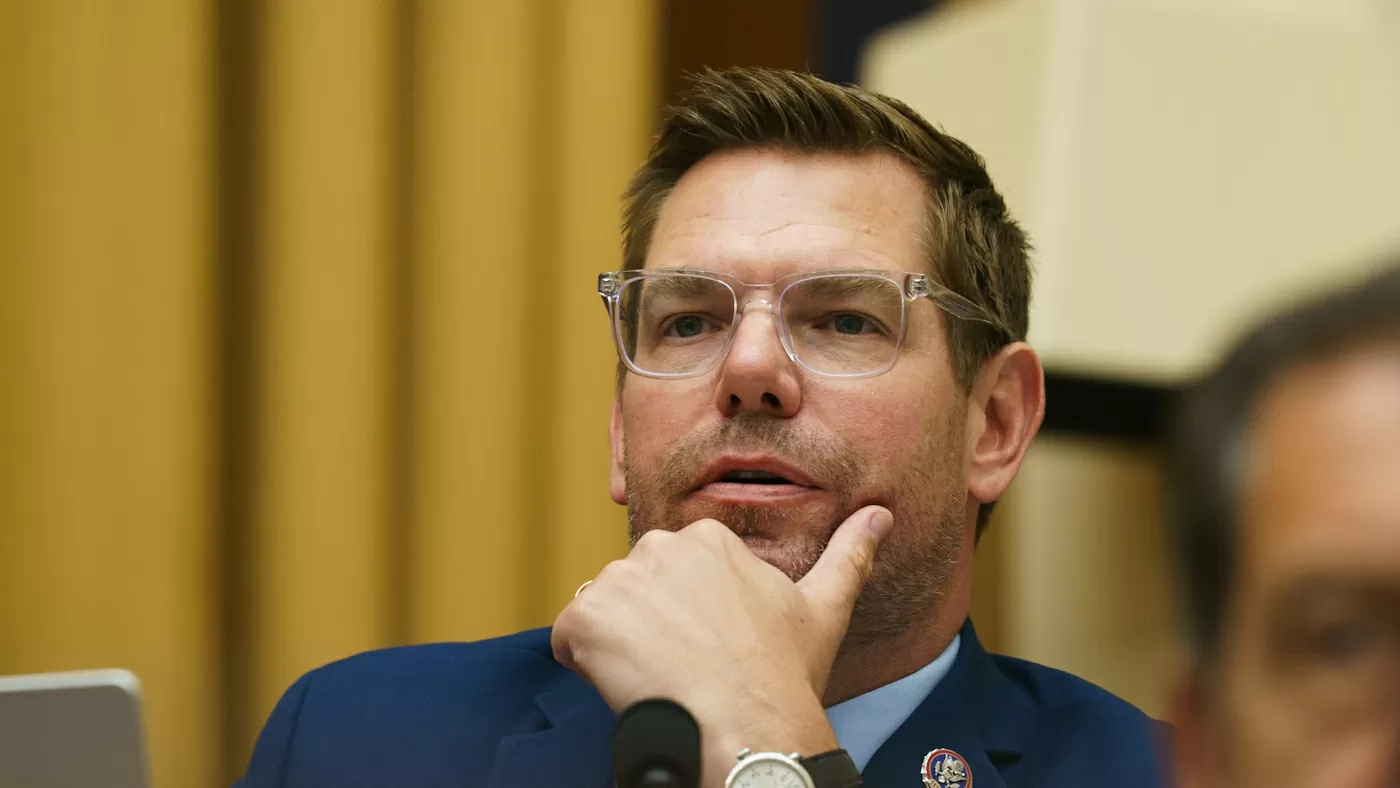
Democratic Representative Eric Swalwell of California has filed a lawsuit against the Federal Housing Finance Agency (FHFA), accusing its leader of abusing his authority by forwarding a criminal referral regarding the lawmaker’s mortgage. This move by Swalwell marks the first of its kind, as FHFA Director Bill Pulte has made four criminal referrals for Democrats, alleging they committed some type of mortgage fraud.
The lawsuit, filed in the U.S. District Court for the Northern District of California, claims that Pulte’s actions were politically motivated and a violation of Swalwell’s constitutional rights. According to the complaint, Pulte’s referral was based on false and misleading information, and was made with the intention of damaging Swalwell’s reputation and political career.
Swalwell’s mortgage has been a subject of scrutiny since 2012, when he was first elected to Congress. At the time, he took out a loan from a bank that was later acquired by a government-backed mortgage company, Fannie Mae. In 2019, Pulte received a tip from a whistleblower alleging that Swalwell had received preferential treatment in securing the loan.
However, Swalwell maintains that he followed all necessary procedures and did not receive any special treatment. He also points out that the loan was approved by Fannie Mae’s underwriting process and was not flagged for any irregularities.
The lawsuit argues that Pulte’s referral was not based on any evidence of wrongdoing, but rather on his personal political bias. It also claims that Pulte’s actions were in violation of the FHFA’s own policies, which state that criminal referrals should only be made when there is a reasonable belief that a crime has been committed.
Swalwell’s attorney, Randall Eliason, stated that the lawsuit is not just about defending his client’s reputation, but also about holding government officials accountable for their actions. He said, “This is a case about the abuse of government power for political purposes. We believe that Director Pulte’s actions were not only unlawful but also a threat to the integrity of our democratic system.”
The FHFA has not yet responded to the lawsuit, but Pulte has previously defended his decision to make the referral, stating that it was his duty to report any potential criminal activity. However, critics argue that Pulte’s actions are part of a larger pattern of targeting Democratic lawmakers and using the power of his position for political gain.
This lawsuit has raised concerns about the politicization of government agencies and the potential consequences for individuals who hold opposing political views. Swalwell’s case is just one example of how government officials can use their power to target and intimidate their political opponents.
In a statement, Swalwell said, “I am not going to let this baseless and politically motivated attack on my character and reputation go unchallenged. This is not just about me, but about the integrity of our government and the rule of law.”
The outcome of this lawsuit could have far-reaching implications for the FHFA and other government agencies. It will also serve as a test of the checks and balances in place to prevent the abuse of power by government officials.
In the current political climate, it is more important than ever to uphold the principles of fairness and justice. The actions of government officials should not be driven by personal biases or political agendas, but rather by the pursuit of truth and justice.
Swalwell’s lawsuit is a reminder that no one is above the law, and that the abuse of power will not be tolerated. It is a brave and necessary step towards holding government officials accountable for their actions and ensuring that our democracy remains strong and just.
As this case moves forward, it is important for all Americans to pay attention and demand transparency and accountability from our government. We must not allow political differences to overshadow the principles of fairness and justice that are the foundation of our democracy.
