
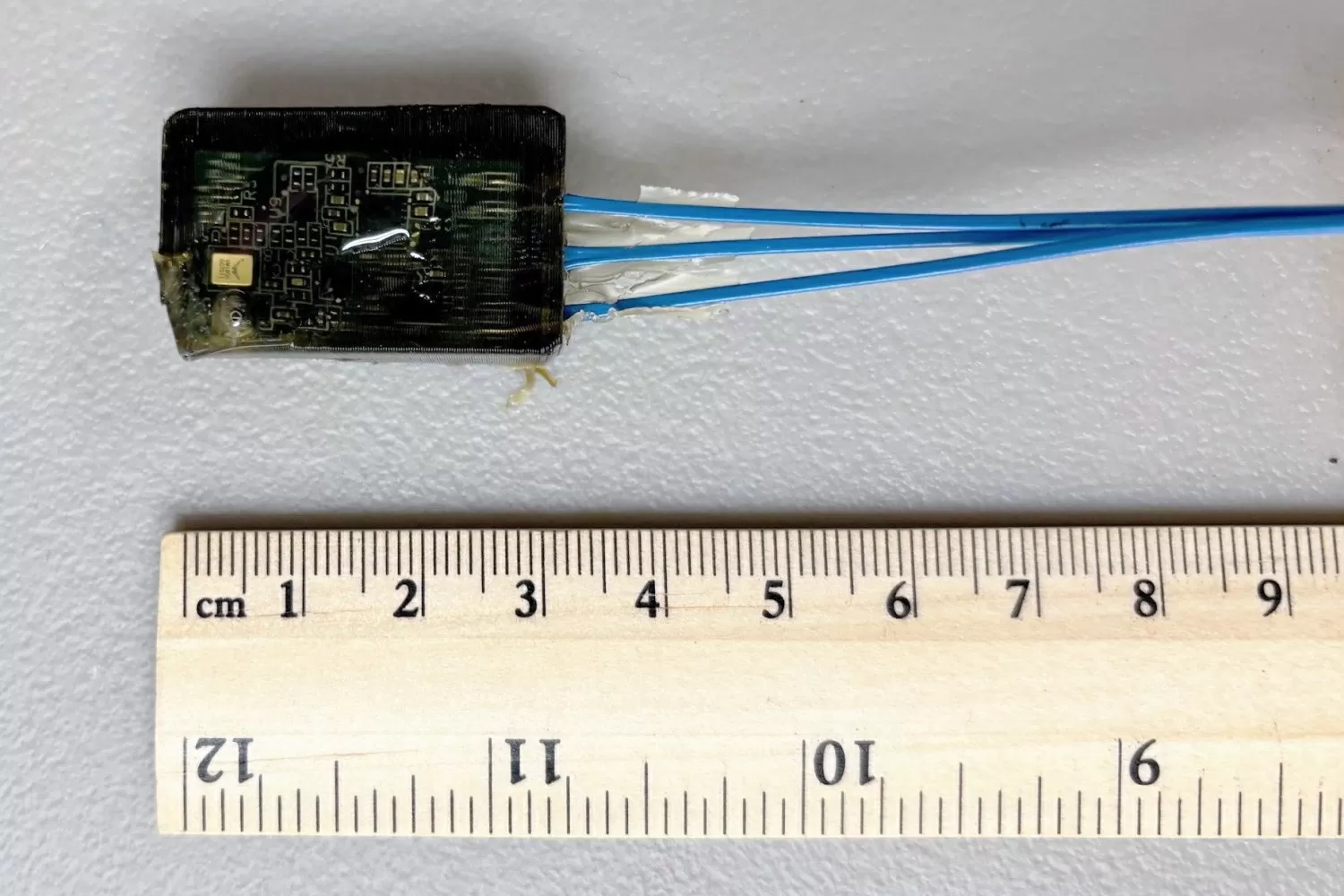
MIT Lincoln Laboratory, a federally funded research and development center, has recently made a groundbreaking discovery in the field of underwater acoustics. Their team of researchers has designed a hydrophone using common MEMS (Micro-Electro-Mechanical Systems) parts, which has the potential to revolutionize the defense, industrial, and undersea research applications.
A hydrophone is a device used to detect and measure sound underwater. It is an essential tool for various industries, including defense, oil and gas, and marine research. However, traditional hydrophones are bulky, expensive, and have limited capabilities. This is where the MIT Lincoln Laboratory’s hydrophone comes in.
The team at MIT Lincoln Laboratory has successfully designed a hydrophone using common MEMS parts, which are widely available and cost-effective. This breakthrough has the potential to make hydrophones more accessible and affordable for various applications.
One of the most significant advantages of this new hydrophone is its size. Traditional hydrophones are large and heavy, making them challenging to deploy and maneuver underwater. On the other hand, the MEMS-based hydrophone is small and lightweight, making it easier to handle and transport. This feature is especially crucial for defense applications, where hydrophones are used for underwater surveillance and detection of enemy submarines.
Moreover, the use of common MEMS parts has significantly reduced the cost of the hydrophone. This makes it more feasible for industries to use hydrophones for various purposes, such as monitoring underwater pipelines in the oil and gas industry or studying marine life in the field of marine research.
The MEMS-based hydrophone also offers improved performance compared to traditional hydrophones. It has a higher sensitivity, allowing it to detect even the faintest of sounds underwater. This is particularly beneficial for undersea research, where scientists need to study the sounds made by marine animals and their environment.
The team at MIT Lincoln Laboratory has also incorporated advanced signal processing techniques into the hydrophone, making it more efficient in filtering out unwanted noise and enhancing the desired signals. This feature is crucial for defense applications, where the hydrophone needs to detect and track specific sounds in a noisy underwater environment.
The potential applications of this new hydrophone are vast. In the defense sector, it can be used for submarine detection, underwater communication, and surveillance. In the oil and gas industry, it can be used for pipeline monitoring and leak detection. In the field of marine research, it can aid in studying marine life and their behavior.
The team at MIT Lincoln Laboratory has already conducted successful field tests of the MEMS-based hydrophone, and the results have been promising. The hydrophone has shown excellent performance in various underwater environments, including shallow and deep waters.
The use of common MEMS parts in the design of this hydrophone also opens up opportunities for further advancements and improvements. As MEMS technology continues to evolve, the hydrophone can be upgraded with more advanced features, making it even more versatile and efficient.
The development of this hydrophone is a testament to the expertise and innovation of the researchers at MIT Lincoln Laboratory. Their dedication and hard work have resulted in a game-changing technology that has the potential to benefit various industries and advance our understanding of the underwater world.
In conclusion, the MIT Lincoln Laboratory’s hydrophone, designed using common MEMS parts, is a significant breakthrough in the field of underwater acoustics. Its small size, affordability, and improved performance make it a valuable tool for defense, industrial, and undersea research applications. This innovation has the potential to make a significant impact in various industries and pave the way for further advancements in underwater technology.
