
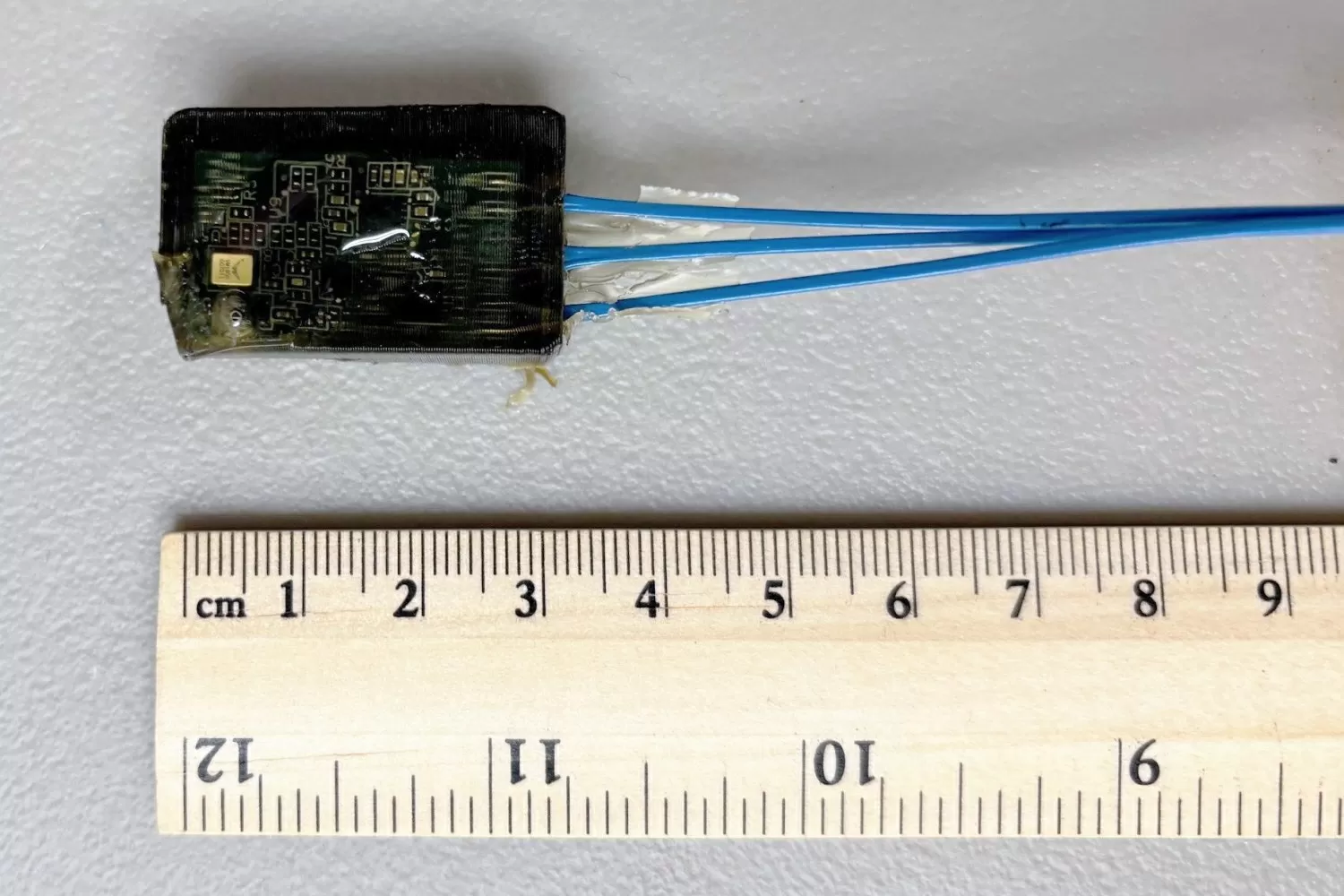
MIT Lincoln Laboratory has made a groundbreaking development in the field of undersea research and defense technology with the creation of a hydrophone using common MEMS parts. This innovative device has opened up new possibilities for a wide range of applications, from defense to industrial and undersea research.
A hydrophone is an underwater microphone that is used to detect and record sound waves in the ocean. These sound waves can provide valuable information about the underwater environment, including the presence of marine life, underwater vehicles, and even potential threats. Traditional hydrophones are often large, expensive, and difficult to maintain, making them impractical for many applications. However, the researchers at MIT Lincoln Laboratory have found a solution to these challenges by utilizing common MEMS parts in the design of their hydrophone.
MEMS, or microelectromechanical systems, are tiny mechanical devices that are typically found in everyday electronics such as smartphones and digital cameras. These parts are cost-effective, easy to manufacture, and can be mass-produced, making them an ideal solution for the development of the hydrophone. By incorporating MEMS parts into the design, the researchers were able to create a compact, lightweight, and affordable hydrophone that can be used in a variety of settings.
One of the most significant benefits of this new hydrophone is its potential use in defense applications. With the increasing importance of undersea warfare, the need for advanced underwater sensing technology has become more critical than ever. The traditional hydrophones used in defense applications are often bulky and challenging to deploy, limiting their effectiveness. However, the hydrophone designed by MIT Lincoln Laboratory can be easily integrated into existing defense systems, providing a more comprehensive and accurate underwater surveillance capability.
In addition to defense, this innovative hydrophone also has implications for industrial and undersea research. The ability to detect and record underwater sound waves can help researchers better understand the underwater environment and the impact of human activities on marine life. This information can then be used to develop more effective conservation and management strategies. The compact size and low cost of the hydrophone make it a practical option for researchers working in various fields, from marine biology to oceanography.
The development of this hydrophone also showcases the potential of using common MEMS parts in other applications. As technology continues to advance, we are seeing an increasing number of small, inexpensive devices that are capable of performing complex tasks. The use of MEMS parts in the design of the hydrophone is a prime example of this trend, and it opens up new possibilities for the development of other innovative devices in the future.
Moreover, the creation of this hydrophone highlights the importance of collaboration between different fields of science and technology. The researchers at MIT Lincoln Laboratory have combined their expertise in acoustics, electronics, and mechanical engineering to create this groundbreaking device. This interdisciplinary approach has resulted in a hydrophone that is both efficient and cost-effective, demonstrating the power of collaboration in driving innovation.
In conclusion, the design of the hydrophone using common MEMS parts by MIT Lincoln Laboratory is a significant milestone in the field of undersea research and defense technology. This compact, lightweight, and affordable device has the potential to revolutionize the way we gather information from the underwater environment, making it a valuable tool for a wide range of applications. It is a testament to the power of innovation, collaboration, and the endless possibilities of technology. With this groundbreaking development, the future of undersea research and defense looks brighter than ever before.
