
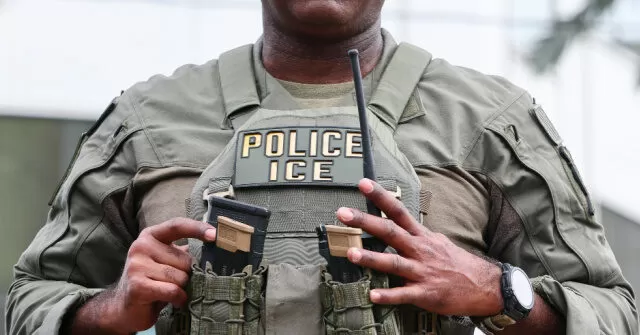
In recent years, the issue of transparency and accountability within law enforcement has been a hotly debated topic. And now, a federal judge in Chicago is taking a bold step to ensure that the Immigration and Customs Enforcement (ICE) officers under his jurisdiction are held to the highest standards of professionalism and integrity. Judge Robert Dow is pushing for ICE officers to be equipped with body cameras, a move that has the potential to greatly improve the relationship between authorities and the communities they serve.
Body cameras have become an increasingly common tool used by law enforcement agencies across the country. These small devices, worn by officers, record interactions with the public and can provide valuable evidence in cases of alleged misconduct. However, ICE has been resistant to the idea of requiring their officers to wear body cameras. Judge Dow’s decision to take action is a necessary step towards ensuring that ICE officers are held accountable for their actions.
The push for body cameras comes in the wake of numerous reports of misconduct and abuse by ICE officers. In May of this year, a report by the Department of Homeland Security’s Office of Inspector General revealed disturbing findings of misconduct and lapses in oversight within ICE. The report found that ICE officers had engaged in a pattern of verbal abuse and physical mistreatment of detainees, including instances of sexual assault and denial of medical care. These troubling findings only further highlight the need for increased transparency and accountability within the agency.
Judge Dow’s decision to require ICE officers to wear body cameras is a crucial step towards addressing these issues. The use of body cameras has been proven to reduce use of force incidents and improve officer behavior. It also provides a level of protection for both officers and civilians, ensuring that interactions are fully documented and can be reviewed in cases of alleged misconduct. By requiring the use of body cameras, Judge Dow is sending a clear message that ICE officers must conduct themselves with the utmost professionalism and adhere to the highest standards of conduct.
Critics of the decision argue that this move will unnecessarily burden ICE officers and may infringe on their privacy. However, these concerns are unfounded. Body cameras have been successfully implemented in other law enforcement agencies without any significant issues. In fact, many officers have found that the use of body cameras can actually work in their favor by providing evidence that exonerates them from false accusations. The use of body cameras also has the potential to improve public trust in law enforcement, as it allows for transparency and accountability in interactions with civilians.
Judge Dow’s decision to require body cameras for ICE officers is not only a step towards improving accountability, but it also has the potential to improve the relationship between law enforcement and the communities they serve. With tensions running high in immigrant communities, the use of body cameras can provide a level of reassurance that interactions with ICE officers will be conducted in a fair and professional manner. This move has the potential to build trust between law enforcement and immigrant communities, which is essential for maintaining safe and secure communities.
In conclusion, Judge Dow’s decision to require ICE officers to wear body cameras is a necessary step towards promoting transparency and accountability within the agency. The use of body cameras will not only protect civilians from potential abuse, but it also has the potential to improve the relationship between law enforcement and the communities they serve. It is time for ICE to embrace this important tool and for other law enforcement agencies to follow suit. Only by holding our law enforcement officers to the highest standards can we ensure a just and safe society for all.
