
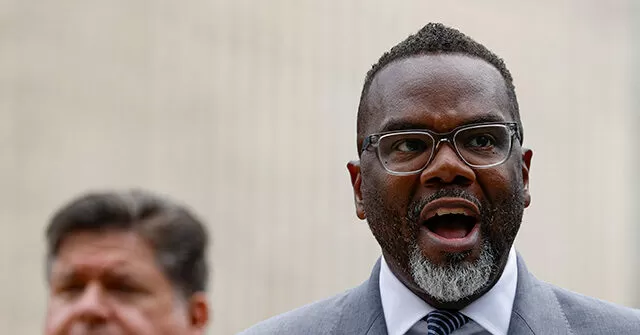
Illinois Gov. JB Pritzker and Chicago Mayor Brandon Johnson have been at odds with President Donald Trump over his recent suggestion that they should be arrested for obstructing the legal actions of federal law enforcement. The two Democrats have responded with defiance and accusations of racism, setting the stage for a potential clash between state and federal authorities.
The tension began when President Trump tweeted that Pritzker and Johnson should be arrested for their refusal to cooperate with Immigration and Customs Enforcement (ICE) in Chicago. The city has declared itself a “sanctuary city,” meaning it will not assist federal authorities in enforcing immigration laws.
Pritzker, who has been a vocal critic of the Trump administration’s immigration policies, quickly fired back at the president. In a statement, he declared, “I will not back down to threats from the White House. Illinois stands with our immigrant communities and will not be intimidated by this president.”
Johnson also chimed in, accusing Trump of using “bully tactics” and playing the “race card.” He stated, “We will not be intimidated by a president who is attempting to distract from his own failures by targeting our diverse and welcoming city.”
The president’s tweet comes on the heels of recent ICE raids in major cities across the country, including Chicago. These raids have sparked fear and outrage among immigrant communities, as families are torn apart and individuals are deported. Pritzker and Johnson have made it clear that they will not stand for these actions in their city.
But Trump’s suggestion that they should be arrested for their stance on immigration has raised concerns about the potential for a showdown between state and federal authorities. Some have even speculated that the president’s tweet was meant to provoke a response and escalate the situation.
Despite the tension and heated rhetoric, Pritzker and Johnson have both maintained that they are upholding the law and protecting the rights of their constituents. They argue that it is within their rights as state and local leaders to determine how their cities and states will handle immigration enforcement.
Furthermore, they argue that their actions are in line with the values of their communities, which have long been known for their diversity and inclusivity. They have made it clear that they will not waver in their commitment to protecting the rights and well-being of all residents, regardless of their immigration status.
In response to the backlash, the Trump administration has defended the president’s comments, stating that he has the authority to enforce federal immigration laws. White House press secretary Sarah Sanders also called out Pritzker and Johnson for their refusal to work with ICE, stating, “They are putting their own political agenda ahead of the safety and security of their citizens.”
The clash between state and federal authorities over immigration policies is not a new phenomenon. In recent years, there has been an increase in tension as some states and cities have declared themselves sanctuary jurisdictions, while the federal government has ramped up efforts to crack down on illegal immigration.
But what sets this situation apart is the personal attack on Pritzker and Johnson by the president. By singling out these two Democratic leaders and threatening them with arrest, Trump has once again shown his disregard for the rule of law and his tendency to use inflammatory rhetoric to divide and distract.
In the face of this attack, Pritzker and Johnson have stood their ground and remained steadfast in their commitment to protecting their communities. They have shown true leadership in the face of adversity and have set an example for others to follow.
As the tension between state and federal authorities continues to escalate, it is important for all leaders to remember that their primary responsibility is to serve and protect their constituents. Instead of engaging in divisive rhetoric and political posturing, they should work together to find solutions that benefit all members of their communities.
In the end, it is the people who will suffer the most if this situation spirals out of control. It is time for all parties involved to put aside their differences and work towards a resolution that upholds the rule of law and respects the rights of all individuals. Let us hope that cooler heads will prevail and that a peaceful and just solution can be reached.
