
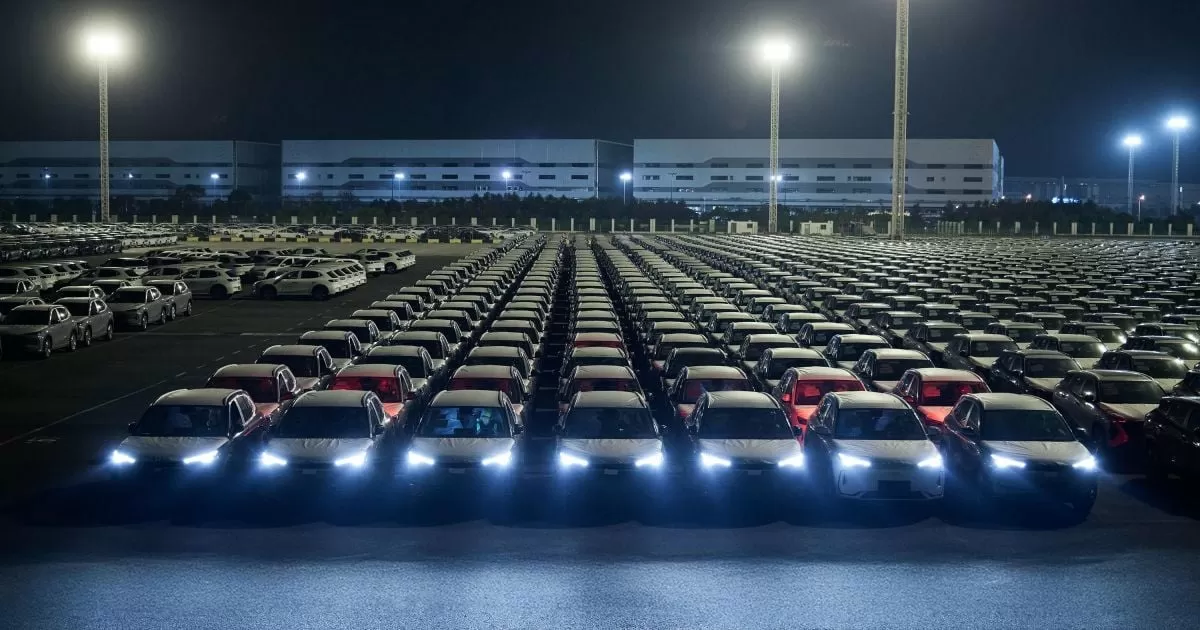
The automotive industry has undergone a significant transformation in recent years, with the rise of Chinese manufacturers taking center stage. These companies have quickly gained a foothold in the market, offering competitive prices and a wide range of vehicles to consumers. However, according to a BMW executive, the rapid growth of Chinese manufacturers in the auto sector may not be sustainable in the long run.
In a recent interview, BMW’s Chief Executive Officer, Oliver Zipse, expressed his concerns about the long-term viability of Chinese manufacturers in the auto industry. He stated that while these companies have seen impressive growth in recent years, they have yet to prove their sustainability in the long run. Zipse’s comments have sparked a debate among industry experts, with some agreeing with his views while others remain optimistic about the future of Chinese manufacturers.
One of the main reasons behind the rapid growth of Chinese manufacturers is their ability to offer vehicles at lower prices compared to their Western counterparts. This has allowed them to gain a significant market share in developing countries, where price is a major factor for consumers. However, this strategy may not be sustainable in the long run as it often comes at the cost of compromising on quality and safety standards.
Zipse also highlighted the importance of technology and innovation in the auto industry. He stated that while Chinese manufacturers have made significant progress in this area, they still have a long way to go to catch up with established players like BMW. The German automaker has been at the forefront of innovation, with a strong focus on electric and autonomous vehicles. This has allowed them to maintain a competitive edge in the market and attract a loyal customer base.
Another factor that may hinder the long-term viability of Chinese manufacturers is their lack of brand recognition and trust. Established brands like BMW have built a reputation for quality and reliability over the years, which gives them an advantage over newer players in the market. Chinese manufacturers may struggle to gain the trust of consumers, especially in Western markets, where brand loyalty plays a significant role in purchasing decisions.
Despite these concerns, the growth of Chinese manufacturers in the auto sector cannot be ignored. They have made significant progress in a relatively short period, and their potential for further growth cannot be underestimated. In fact, some experts argue that Chinese manufacturers may eventually become major players in the global auto industry, challenging the dominance of established brands.
One of the key strengths of Chinese manufacturers is their adaptability and agility in responding to market trends and consumer demands. They have been quick to embrace new technologies and have a strong focus on electric and autonomous vehicles, which are expected to dominate the industry in the future. This gives them a competitive advantage over traditional automakers, who may struggle to adapt to the changing landscape.
Moreover, Chinese manufacturers have also been investing heavily in research and development, which is crucial for long-term sustainability. They have established partnerships with leading technology companies and are constantly looking for ways to improve their products and services. This shows their commitment to staying ahead of the curve and continuously evolving to meet the needs of consumers.
In conclusion, while the concerns raised by the BMW executive are valid, it is too early to dismiss the potential of Chinese manufacturers in the auto sector. They have made significant progress and have the potential to become major players in the global market. However, to ensure their long-term viability, they must focus on building a strong brand reputation, investing in technology and innovation, and maintaining high-quality standards. With the right strategies in place, Chinese manufacturers can continue to thrive and contribute to the growth of the auto industry.
