
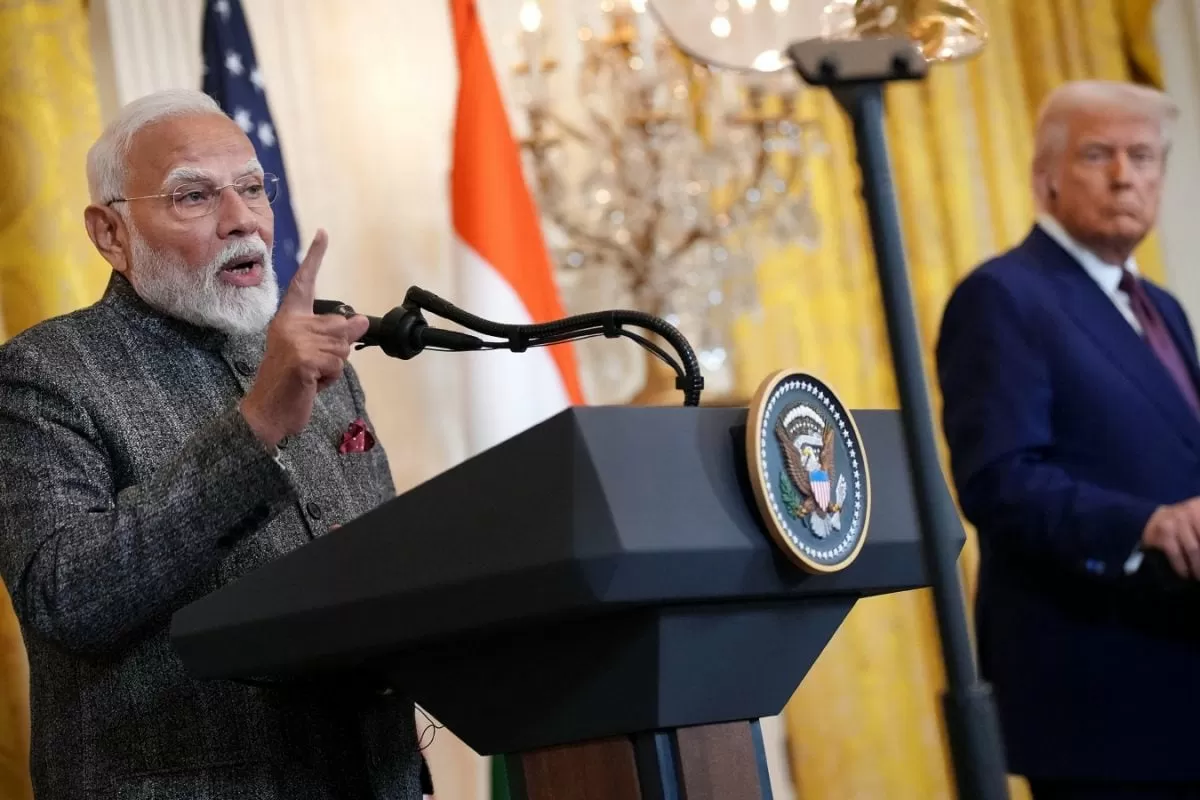
In recent years, the United States has been engaged in a series of trade disputes with some of its biggest trading partners, including China, Mexico, and the European Union. These disputes have largely revolved around the issue of tariffs, with the US imposing tariffs on various goods and products from these countries in an effort to reduce its trade deficits. However, one country that has often been singled out by President Trump in his trade rhetoric is India. This has raised questions about the true intentions behind these tariffs and whether they are truly about fixing America’s biggest deficits.
Firstly, it is important to understand the concept of tariffs and their purpose. Tariffs are essentially taxes imposed on imported goods, making them more expensive for consumers. The idea behind tariffs is to protect domestic industries and promote local production by making foreign goods less competitive. In theory, this should lead to a decrease in imports and an increase in exports, thus reducing trade deficits. However, in practice, the effects of tariffs can be more complex and far-reaching.
When it comes to the US, the country’s biggest trade deficits are with China, Mexico, and the European Union. These three entities account for a significant portion of America’s imports, making them logical targets for tariffs if the goal is to reduce trade deficits. However, President Trump has often singled out India in his trade rhetoric, citing the country’s trade surplus with the US as a reason for imposing tariffs. This has led to speculation about the true motivations behind these tariffs.
One possible explanation for this could be the US’s long-standing concerns about India’s trade practices. The US has accused India of imposing high tariffs on American goods and creating barriers to market access. In addition, the US has raised concerns about India’s intellectual property laws and its restrictions on foreign investment. These issues have been a source of tension between the two countries for years, and it is possible that the US sees tariffs as a way to address these concerns.
Another factor that may have influenced the US’s decision to target India with tariffs is the country’s growing economy. India has emerged as one of the world’s fastest-growing major economies, with a GDP growth rate of over 7% in recent years. This has made India an attractive market for American businesses, and the US may see tariffs as a way to level the playing field and protect its own industries from competition.
However, it is important to note that the US-India trade relationship is not one-sided. While India does have a trade surplus with the US, it is also a significant market for American exports. In fact, the US is India’s second-largest trading partner, and American companies have invested billions of dollars in the country. Imposing tariffs on Indian goods could potentially harm these investments and disrupt the strong economic ties between the two countries.
Furthermore, it is worth considering the impact of tariffs on the average American consumer. Tariffs make imported goods more expensive, which means that American consumers end up paying more for these products. This can lead to higher prices and reduced purchasing power, ultimately affecting the overall economy. In addition, tariffs can also lead to retaliatory measures from other countries, creating a trade war that can have negative consequences for all parties involved.
In conclusion, while tariffs may seem like a simple solution to reducing trade deficits, the reality is much more complex. The US’s decision to target India with tariffs may be driven by a combination of factors, including concerns about trade practices and the country’s growing economy. However, it is important to consider the potential consequences of these tariffs, both for the US and its trading partners. Instead of resorting to protectionist measures, it would be more beneficial for all parties to engage in constructive dialogue and find mutually beneficial solutions to address trade imbalances. After all, a strong and fair trade relationship between the US and India can benefit both countries and contribute to global economic growth.
