
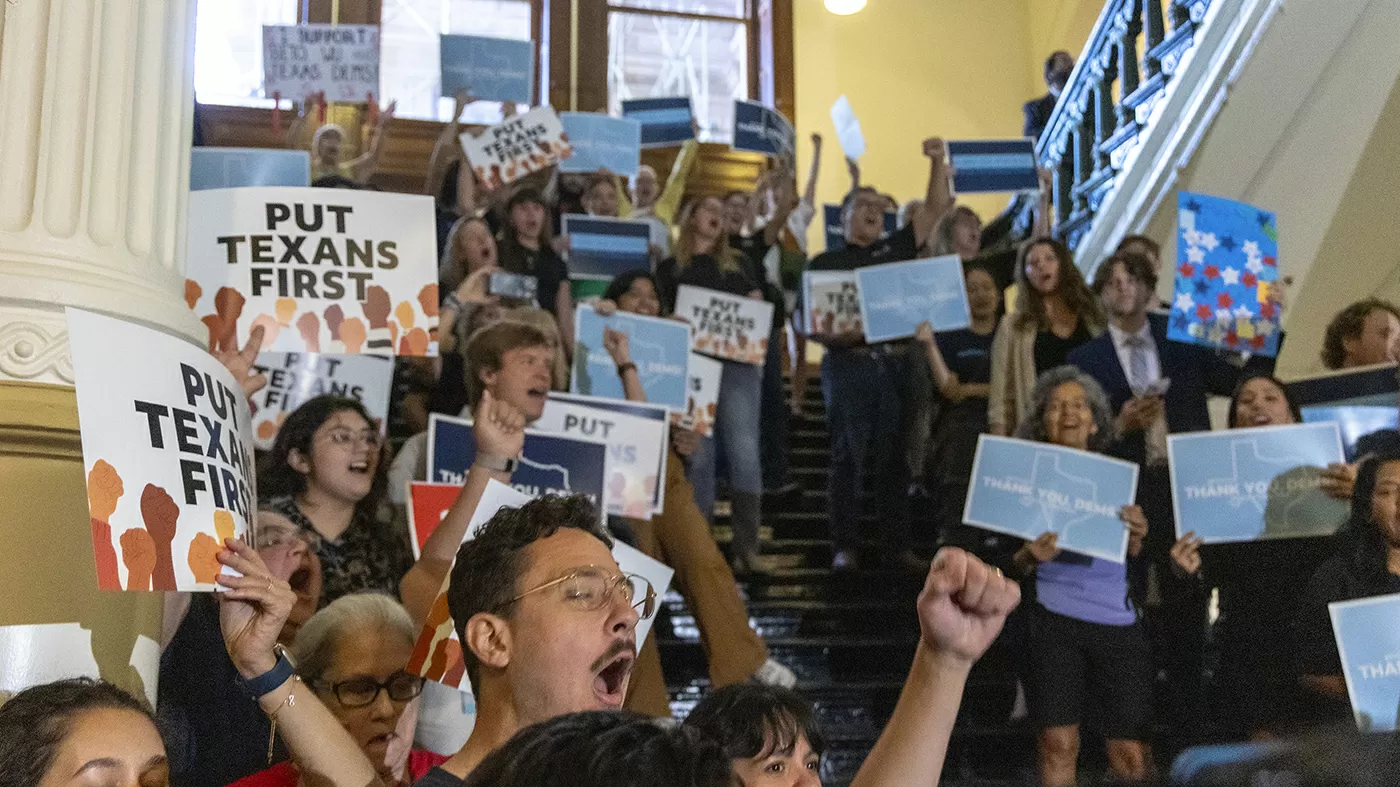
The state of Texas is currently facing a heated battle over redistricting, as the fight now moves to the courts. Democrats and civil rights groups are preparing to challenge the newly passed maps, which they believe are unfair and disadvantageous to certain communities.
The redistricting battle has been ongoing since the release of the 2020 census data, which showed significant population growth in Texas. This growth has resulted in the state gaining two new congressional seats, bringing the total to 38. With this increase in representation, it is crucial to ensure that the district lines are drawn fairly and accurately reflect the population of Texas.
However, the recently passed maps drawn by the Republican-controlled legislature have sparked controversy and backlash. Democrats and civil rights groups argue that the maps dilute the voting power of minority communities and stack the odds in favor of Republican candidates.
In response to the passing of the maps, Texas House Democrats who had previously fled the state in an attempt to stall the process, have announced that they will be returning to the House floor and to the courthouse this week. Their decision to break quorum and leave the state garnered national attention but ultimately did not stop the maps from being passed.
The return of these Democrats to the state capital marks a new front in the redistricting battle, as they vow to continue their fight in the courts. In a joint statement, the Democrats declared, “We are ready to take this fight to the courthouse. We will not stand by and allow these new maps to undermine the voices and votes of Texans.”
Their determination and persistence in advocating for fair and equitable district lines is commendable. The fight for a fair redistricting process is not just about party politics but about ensuring that all voices are heard and represented in the democratic process.
The concerns raised by Democrats and civil rights groups are not unfounded. The new maps have been met with criticism from various organizations, including the NAACP Legal Defense and Educational Fund, who have accused the Republican party of engaging in gerrymandering to maintain their political control.
Furthermore, the newly passed maps have also been scrutinized for not adequately considering the growing population of Hispanic and Black communities in Texas. These groups have historically been underrepresented in government and their voices must not be further marginalized in the redistricting process.
The battle over redistricting in Texas is not new. In fact, the state has a long history of politically charged redistricting fights, with both parties using this process to gain an advantage. But, as the state continues to experience rapid growth and demographic changes, it is essential that fair and transparent principles are followed in redrawing district lines.
The fight in the courts is just beginning, and it is crucial for all involved to approach this process with an open mind and a commitment to fairness. The court’s decision will have far-reaching implications, not only for the current political climate but also for future elections in the state.
In conclusion, the redistricting battle in Texas is entering a new front as the fight moves to the courts. Democrats and civil rights groups are determined to challenge the newly passed maps and ensure that the voices and votes of all Texans are protected. Their unwavering commitment to fairness and representation should be applauded. As the legal proceedings unfold, it is important to remember that at the heart of this battle is the fundamental right to fair and equal representation for all.
