
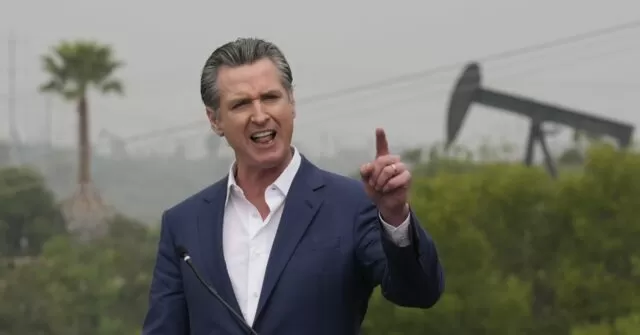
In a surprise move, California Governor Gavin Newsom has made a complete flip-flop on his stance towards oil production in the state. With California facing the threat of steep gas price hikes, Newsom has taken a bold step and is now working with the fossil fuel industry to increase production rather than stopping it. This change in strategy has been met with mixed reactions, but it seems to be a necessary step in order to avoid the potential of $8 per gallon gas prices.
Newsom’s previous stance on oil production was one of strict opposition. He had promised to put an end to all new oil and gas drilling in the state by 2024, and had even halted the approval of new fracking projects in the state. This move was seen as a bold and progressive step towards reducing the state’s carbon footprint and transitioning to renewable energy sources. However, with the looming threat of high gas prices, Newsom has had to reconsider his decision.
California is known for its high gas prices, and with the state already struggling to recover from the economic impact of the pandemic, the potential of $8 per gallon gas prices is a major cause for concern. This would not only have a significant impact on the daily lives of Californians, but it could also have a ripple effect on the state’s economy as a whole. In order to avoid this, Newsom has decided to take a more pragmatic approach and work with the fossil fuel industry to increase production.
This decision has not been an easy one for Newsom, as it goes against his previous promises and beliefs. However, it is a necessary step in order to ensure the economic stability of the state. In a statement, Newsom said, “The reality is, we use oil in our cars, we use oil in our planes, we use oil in our ships. We’re not going to transition off oil overnight.” This acknowledgment of the current reality is a refreshing change from the previous rigid stance on oil production.
The state’s oil and gas industry has welcomed Newsom’s decision, with many seeing it as a sign of the governor’s willingness to work with them rather than against them. The industry has also emphasized the importance of oil production in the state’s economy, providing thousands of jobs and contributing billions of dollars in revenue. By increasing production, the state will not only be able to avoid high gas prices but also boost its struggling economy.
However, Newsom’s decision has also faced criticism from environmentalists and climate activists, who see it as a step backward in the fight against climate change. They argue that rather than increasing production, the state should be focusing on transitioning to renewable energy sources. However, Newsom has reassured that the state will continue to invest in renewable energy and work towards achieving its goal of 100% clean energy by 2045.
In the end, Newsom’s decision to work with the fossil fuel industry to increase oil production may not please everyone, but it is a necessary step in order to avoid the potential of $8 per gallon gas prices in California. It is a pragmatic move that prioritizes the economic stability of the state while still acknowledging the need to transition to renewable energy in the long run. Newsom’s flip-flop on oil production is a sign of his willingness to adapt and make tough decisions in the face of challenges, and it is a step in the right direction for the state of California.
