
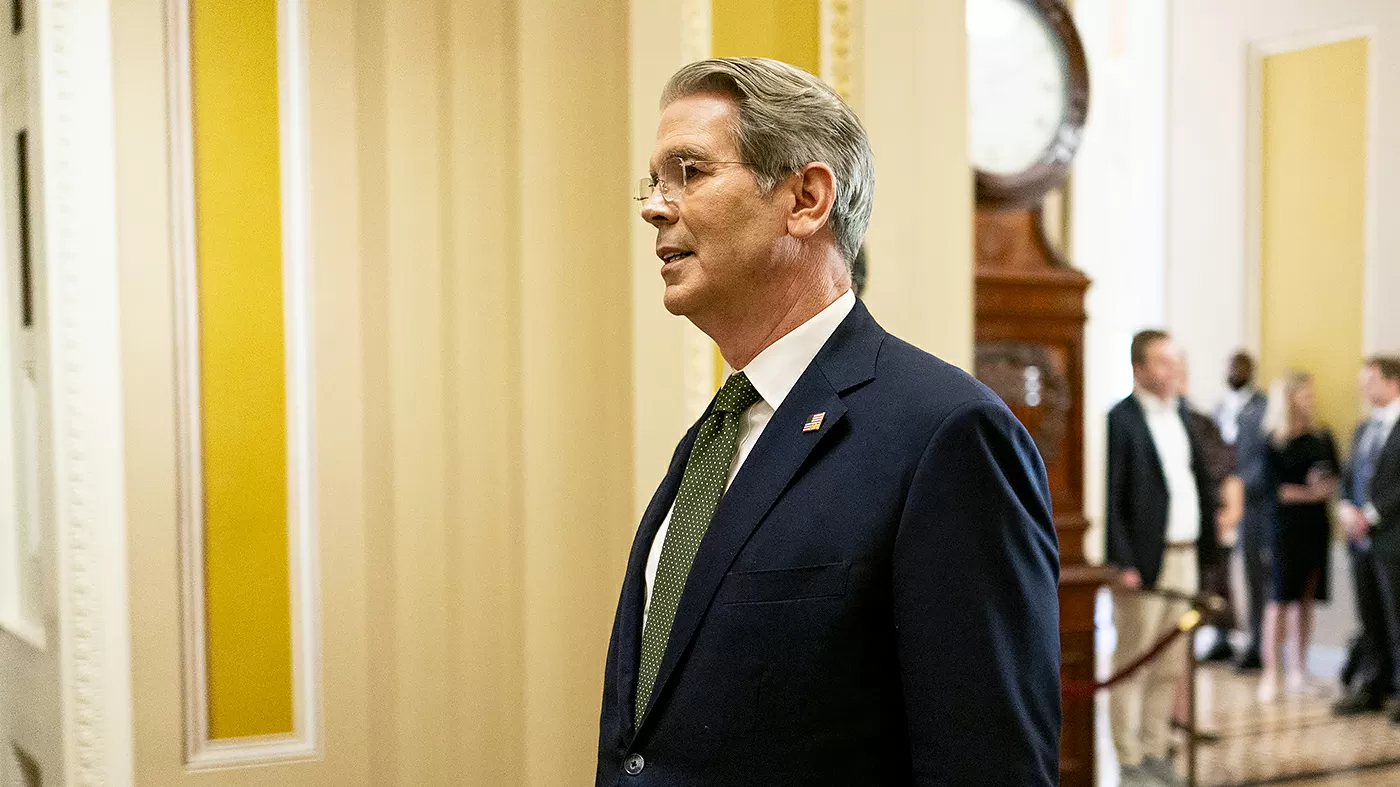
Treasury Secretary Calls for Ban on Lawmakers Trading Individual Stocks, Citing Credibility Concerns
In a bold move to uphold the integrity of the House and Senate, Treasury Secretary Scott Bessent has called for a ban on lawmakers trading individual stocks. This statement, made on Wednesday during an interview with Bloomberg, takes a direct shot at former Speaker Nancy Pelosi and Senator Ron Wyden, both Democrats, who have been accused of using their positions for personal financial gain.
Bessent’s call for a single-stock trading ban comes at a time when public trust in government officials is at an all-time low. The American people have grown increasingly skeptical of their elected representatives, with many believing that they are more concerned with their own financial interests than the well-being of the country.
The Treasury Secretary’s proposal is a step in the right direction towards restoring the public’s faith in their government. By prohibiting lawmakers from trading individual stocks, it eliminates any potential conflicts of interest and ensures that their decisions are not influenced by personal financial gain.
During the interview, Bessent specifically mentioned Pelosi and Wyden, who have both faced scrutiny for their stock trading activities. In 2020, Pelosi purchased up to $1 million worth of Tesla stock just weeks before President Biden announced plans to replace the government’s vehicle fleet with electric cars. Similarly, Wyden bought and sold stocks in healthcare and technology companies while serving as the top Democrat on the Senate Finance Committee, which oversees healthcare and technology policies.
These actions have raised concerns about insider trading and the potential for lawmakers to use their positions for personal financial gain. Bessent’s proposal aims to put an end to these questionable practices and restore the public’s trust in their elected officials.
The Treasury Secretary’s call for a single-stock trading ban is not without precedent. In 2012, Congress passed the STOCK Act, which prohibits lawmakers and their staff from using non-public information for personal financial gain. However, the law does not prevent them from trading individual stocks, leaving room for potential conflicts of interest.
Bessent’s proposal would go a step further by completely banning lawmakers from trading individual stocks, ensuring that their decisions are solely based on the best interests of the country. This move would also bring the US in line with other countries, such as Canada and the UK, where lawmakers are already prohibited from trading individual stocks.
Some may argue that this ban would limit lawmakers’ ability to invest and manage their personal finances. However, as public servants, their primary focus should be on serving the American people, not on their personal financial gains. Furthermore, there are plenty of other investment options available that do not pose a conflict of interest, such as mutual funds and index funds.
Bessent’s proposal has already gained support from both sides of the political aisle. Republican Senator Rick Scott has expressed his support for the ban, stating that “members of Congress should not be able to use their positions for personal financial gain.” Democratic Senator Elizabeth Warren has also been a vocal advocate for stricter regulations on lawmakers’ stock trading activities.
In conclusion, Treasury Secretary Scott Bessent’s call for a ban on lawmakers trading individual stocks is a much-needed step towards restoring the public’s trust in their government. By eliminating potential conflicts of interest, this ban would ensure that lawmakers’ decisions are solely based on the best interests of the country. It is time for Congress to take action and pass this ban to uphold the credibility of the House and the Senate.
