
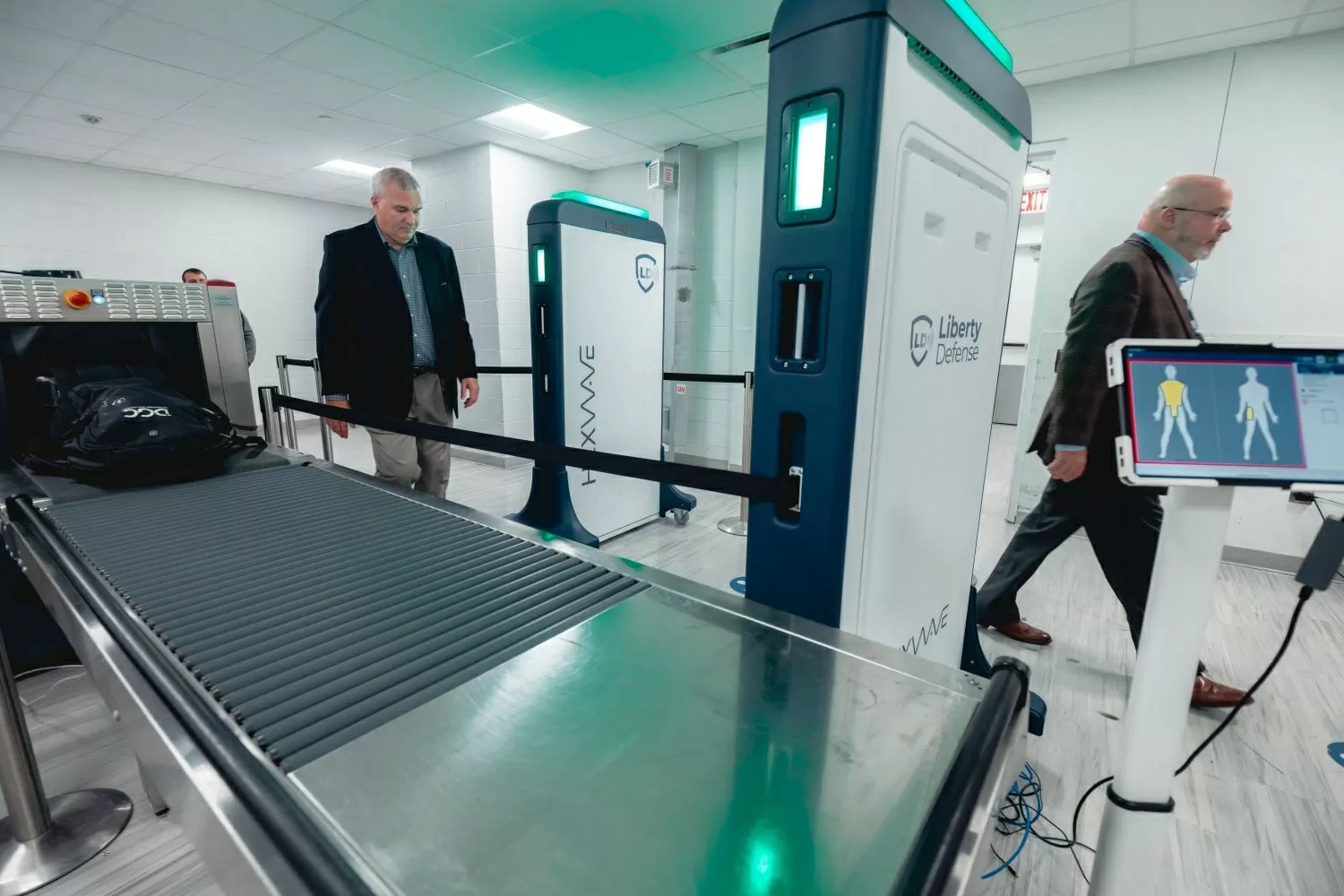
Lincoln Laboratory, a research and development center of the Massachusetts Institute of Technology (MIT), has been at the forefront of technological advancements for over 70 years. Their latest breakthrough in 3D microwave imaging technology has been integrated into HEXWAVE, a commercially developed security system by Liberty Defense. This partnership has the potential to revolutionize the way we detect concealed threats in public spaces.
HEXWAVE is a security system designed to detect concealed threats such as weapons and explosives in public areas. It uses advanced imaging technology to create a 3D image of a person’s body and any objects they may be carrying. This allows security personnel to identify potential threats without the need for physical pat-downs or invasive searches.
What sets HEXWAVE apart from other security systems is its use of 3D microwave imaging technology, developed by Lincoln Laboratory. This technology uses low-power microwaves to create a high-resolution 3D image of a person’s body and any objects they may be carrying. This allows for a more accurate and detailed scan compared to traditional metal detectors or X-ray machines.
The integration of Lincoln Laboratory’s technology into HEXWAVE has been a game-changer in the field of security. It has the ability to detect both metallic and non-metallic threats, making it more effective than traditional metal detectors. This is especially important as many modern threats, such as plastic explosives, cannot be detected by metal detectors.
Moreover, the 3D imaging technology used in HEXWAVE allows for a more discreet and non-invasive screening process. This is a significant improvement from the current security measures that often require individuals to go through physical pat-downs or remove their shoes and belts for X-ray scans. With HEXWAVE, individuals can simply walk through the scanning portal, making the process faster and less intrusive.
The partnership between Lincoln Laboratory and Liberty Defense has been a fruitful one. The two organizations have worked closely together to integrate the 3D microwave imaging technology into HEXWAVE and ensure its effectiveness in detecting concealed threats. This collaboration has resulted in a cutting-edge security system that has the potential to enhance public safety and security.
One of the key advantages of HEXWAVE is its versatility. It can be easily integrated into existing security infrastructure, making it suitable for a wide range of public spaces such as airports, stadiums, and shopping malls. This means that individuals can be screened for potential threats without causing disruptions to their daily routines.
Another significant benefit of HEXWAVE is its speed. The 3D imaging technology used in this system allows for a rapid scan of individuals, making it ideal for high-traffic areas. This is crucial in today’s fast-paced world, where security threats can arise at any moment.
The integration of Lincoln Laboratory’s technology into HEXWAVE has also made it more cost-effective. Traditional security measures, such as hiring additional security personnel or installing multiple metal detectors, can be expensive. HEXWAVE, on the other hand, requires minimal manpower and can screen a large number of individuals in a short amount of time, making it a cost-effective solution for enhancing security in public spaces.
The potential impact of this technology goes beyond just detecting concealed threats. It can also be used for other applications such as identifying medical conditions or tracking the movement of individuals in a crowded area. This highlights the versatility and potential of 3D microwave imaging technology.
In conclusion, the integration of Lincoln Laboratory’s 3D microwave imaging technology into HEXWAVE has been a significant development in the field of security. This partnership has resulted in a cutting-edge security system that is more accurate, discreet, and cost-effective than traditional methods. With this technology, we can enhance public safety and security in a non-intrusive and efficient manner. The future looks promising with the continuous advancements in technology, and the collaboration between Lincoln Laboratory and Liberty Defense is a prime example of how innovation can make the world a safer place.
