
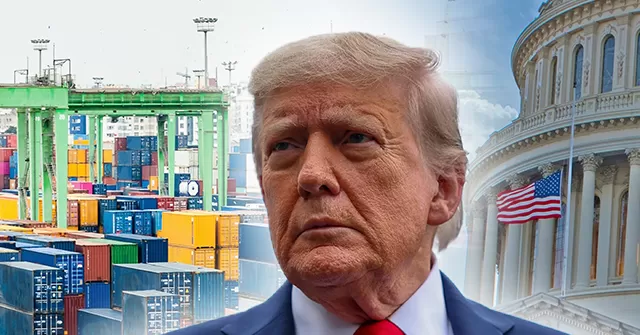
For years, critics have raised concerns about the potential dangers of presidential use of tariff authority. They argue that the executive’s ability to impose tariffs on imported goods threatens the delicate balance of power between the three branches of government, and poses a threat to the American constitutional order.
These concerns have been brought to the forefront once again with the recent actions of President Trump, who has imposed tariffs on a wide range of goods imported from countries such as China, Mexico, and Canada. These tariffs, which are meant to protect American industries and workers, have sparked a heated debate about the limits of presidential power and the role of Congress in regulating international trade.
At the heart of this debate lies the issue of separation of powers, a fundamental principle of the American constitutional system. The founders of our nation were keenly aware of the dangers of centralized power, and thus they designed a system of checks and balances to prevent any one branch of government from becoming too powerful. The Constitution clearly delineates the roles and responsibilities of each branch, and it is the duty of each branch to uphold and defend the boundaries set by the Constitution.
One of the key powers granted to Congress by the Constitution is the authority to regulate foreign trade. This power is explicitly stated in Article I, Section 8, which gives Congress the power to “regulate commerce with foreign nations.” This means that Congress has the sole authority to impose tariffs and other trade restrictions on goods coming into the country. However, over the years, Congress has gradually delegated some of this power to the executive branch, allowing presidents to impose tariffs under certain circumstances.
This delegation of power has been justified by the need for swift action in times of economic crisis or national security threats. However, critics argue that this practice has gone too far and has given the president too much discretion in the area of international trade. They point out that presidents can now unilaterally impose tariffs for any reason, even if it goes against the wishes of Congress and the American people. This not only undermines the role of Congress in regulating foreign trade, but it also has the potential to harm our economy and disrupt our relationships with other countries.
Moreover, the use of tariffs as a negotiating tool in international trade agreements has further blurred the lines of authority between the executive and legislative branches. While presidents may argue that tariffs are a necessary tool in securing fair trade deals, critics argue that this tactic undermines the role of Congress in approving or rejecting such agreements. This creates a dangerous precedent where presidents can bypass Congress and make decisions that have far-reaching consequences for our economy and international relations.
Despite these concerns, supporters of presidential tariff authority argue that it is a necessary tool in protecting American industries and workers from unfair trade practices. They argue that in today’s global economy, it is essential for the president to have the ability to respond quickly to changing economic conditions and to protect American jobs. They also point out that presidents have historically used tariffs to advance American interests and negotiate better trade deals.
However, as the saying goes, with great power comes great responsibility. It is important for presidents to exercise their tariff authority with caution and in accordance with the Constitution. They must also be held accountable for their actions and must involve Congress in major trade decisions. This will ensure that the delicate balance of power is maintained and that the American constitutional order is upheld.
In conclusion, the issue of presidential tariff authority is a complex and contentious one that has far-reaching implications for our nation’s economy and governance. While supporters and critics may have valid arguments, it is essential that we uphold the principles of separation of powers and checks and balances that are the foundation of our constitutional system. As we continue to grapple with this issue, it is important for all branches of government to work together to find a balanced approach that benefits the American people and upholds the integrity of our constitutional order.
