
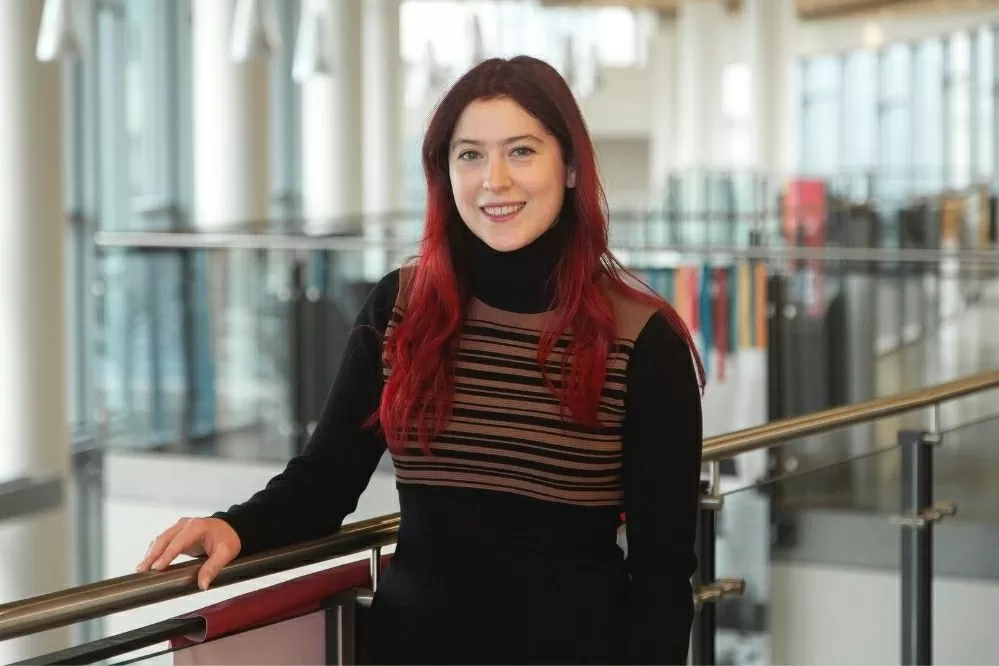
PhD candidate Suzanne Freeman has been making waves in the world of intelligence and foreign policy with her groundbreaking research on how intelligence agencies shape foreign policy in authoritarian states. Her work has shed light on the often murky and secretive world of intelligence operations and their impact on international relations.
Freeman, who is currently pursuing her PhD in International Relations at the prestigious Cambridge University, has been delving into the complex dynamics between intelligence agencies and authoritarian governments. Her research has revealed the significant role that these agencies play in shaping foreign policy decisions, often exerting a strong influence on the actions of their respective governments.
In her groundbreaking study, Freeman examined the case of Russia and its intelligence agency, the Federal Security Service (FSB). She found that the FSB has a strong influence on Russian foreign policy, often shaping decisions in favor of the country’s national interests. This has been evident in Russia’s actions in Syria and Ukraine, where the FSB played a crucial role in gathering intelligence and advising the government on its next moves.
But why do intelligence agencies hold such sway in authoritarian states? Freeman’s research has uncovered that in these types of regimes, where leaders have a tight grip on power, intelligence agencies are often the only institutions with access to critical information and the ability to influence decision-making. This gives them a significant advantage in shaping foreign policy decisions.
Furthermore, Freeman’s research also highlights the close relationship between intelligence agencies and authoritarian leaders. In many cases, these agencies are seen as loyal to the leader rather than the state, making them even more powerful in influencing foreign policy. This has been evident in countries like North Korea, where the intelligence agency is considered one of the most powerful institutions in the country and plays a vital role in shaping the country’s foreign policy.
Freeman’s work has not only shed light on the role of intelligence agencies in authoritarian states but also highlighted the potential risks and challenges associated with their influence. In some cases, these agencies may use their power for their own gain, leading to decisions that may not always be in the best interest of the country. This has been evident in countries like Iran, where the intelligence agency has been accused of manipulating foreign policy decisions to maintain its own power and influence.
However, Freeman’s research also offers valuable insights into how democratic states can navigate their relationships with authoritarian regimes. By understanding the role of intelligence agencies, policymakers can better assess the motivations behind foreign policy decisions and develop more effective strategies for engagement.
Freeman’s groundbreaking research has already garnered attention from policymakers and experts in the field. Her work has been praised for its depth and rigor, and her findings have the potential to shape future policies and approaches towards authoritarian states.
In a world where the actions of authoritarian regimes have significant implications for global stability and security, Freeman’s research is both timely and crucial. Her work not only provides a better understanding of the complex dynamics between intelligence agencies and foreign policy but also offers valuable insights into how these relationships can be managed to promote peace and stability.
As Freeman continues her research and prepares to defend her PhD thesis, she is already making a significant impact in the field of international relations. Her work has the potential to shape the way we view and approach authoritarian regimes, and her findings will undoubtedly contribute to a more nuanced understanding of the role of intelligence agencies in shaping foreign policy.
As she continues her journey as a scholar and researcher, Freeman’s work serves as a reminder of the power of academic inquiry and its potential to bring about positive change in the world. Her dedication and passion for her research are an inspiration to all, and we eagerly await the impact her work will have on shaping our understanding of intelligence agencies and their influence on foreign policy in authoritarian states.
