
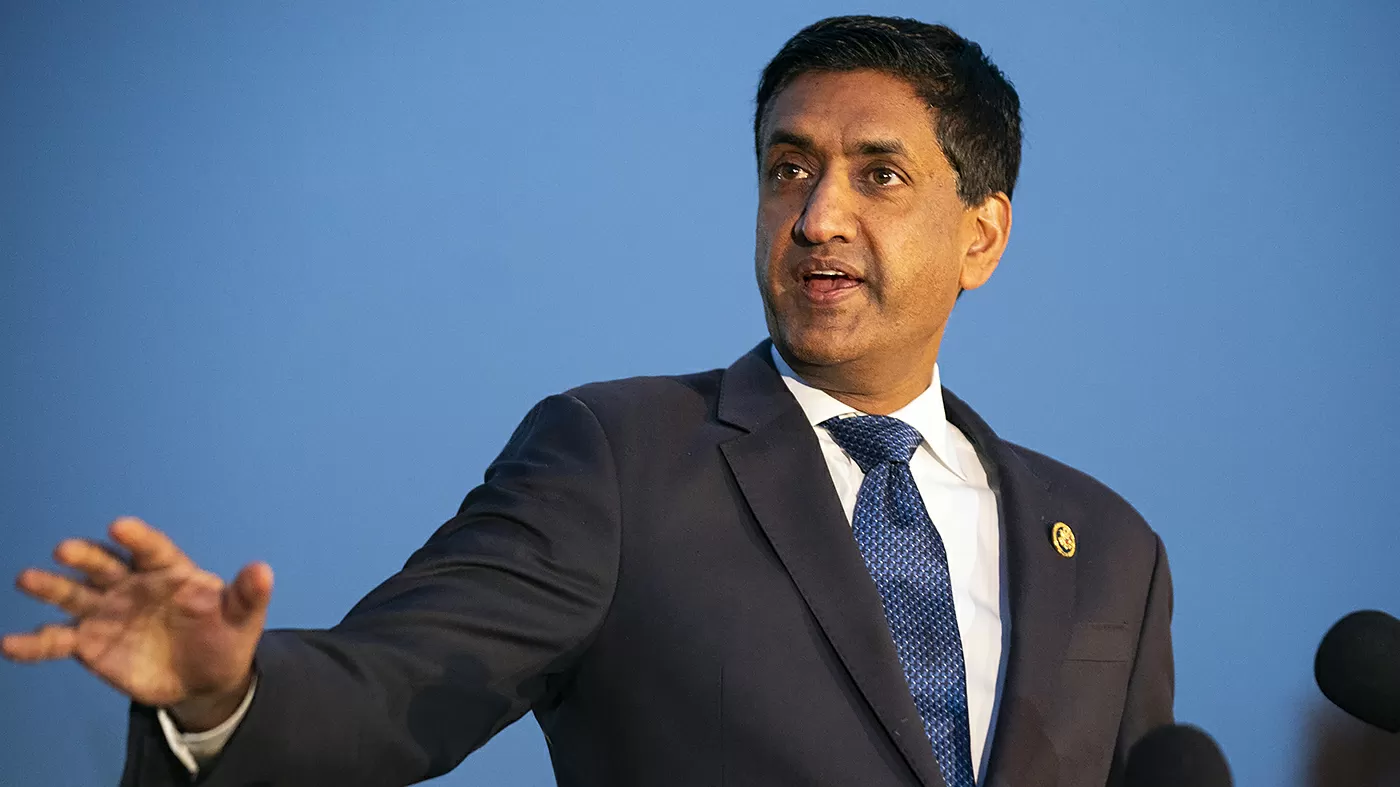
Rep. Ro Khanna (D-Calif.) has recently expressed his concern over the Trump administration’s decision to build a large-scale artificial intelligence (AI) data center in Dubai, instead of on American soil. In an interview on ABC News’s “This Week,” the Congressman from Silicon Valley questioned the reasoning behind this move and suggested that it would have been more beneficial for the United States to have the hub built within the country.
Khanna’s criticism stems from the recent announcement made by the Trump administration about the partnership between the U.S. and the United Arab Emirates (UAE) to build a state-of-the-art AI data center in Dubai. The project, which is estimated to cost around $100 million, aims to enhance technological cooperation between the two nations and promote the advancement of AI technology.
However, Khanna believes that the United States is missing out on a golden opportunity by not taking the lead in this project. He argues that with its strong technological capabilities and thriving AI industry, the U.S. is better equipped to handle and benefit from such a project. By outsourcing it to another country, the U.S. is not only losing out on potential economic growth but also risking its position as a global leader in technology.
In his interview, Khanna raised a valid concern about whether the Trump administration had even attempted to bring this project to American soil, or did they outright choose Dubai as the location without any consideration? As a Congressman who represents the heart of Silicon Valley, Khanna is well aware of the potential benefits such a project could bring to the local economy and the country as a whole. He points out that with the rise of AI, data centers have become crucial infrastructure and not having them within the country is a disadvantage.
The development of AI is rapidly transforming the global economic landscape, and countries are investing heavily in this field to stay ahead. The UAE’s ambitious move to build a mega AI data center in Dubai is a clear indication of its commitment towards becoming a leader in this technology. While it is commendable that the U.S. is looking to strengthen its ties with other nations through technological cooperation, it should not come at the cost of its own progress.
Moreover, Khanna also raised questions about the transparency of this deal and whether it was in line with U.S. national security interests. He emphasized that the U.S. government must thoroughly review and evaluate any such partnership before moving forward, especially when it involves sensitive technology like AI. Khanna is not alone in his concerns, as many experts also believe that the U.S. should handle AI technology with caution and ensure that it does not fall into the wrong hands.
In light of these issues, Rep. Khanna’s remarks highlight the need for the U.S. government to prioritize the development of AI within its own borders. The U.S. has always been at the forefront of scientific and technological advancements, and it is crucial to maintain this position in the growing field of AI. By bringing this project to American soil, the U.S. can not only reap the economic benefits but also maintain control over the technology’s development and ensure its security.
In conclusion, Rep. Ro Khanna’s criticism of the Trump administration’s deal with the UAE to build an AI data center in Dubai raises valid concerns about the U.S.’s role in this project. As a Congressman from Silicon Valley, Khanna is well aware of the potential benefits of such a project to the U.S. economy and its technological advancement. It is high time for the U.S. government to re-evaluate its decisions and prioritize investing in AI development within the country’s borders. If handled correctly, this project can bring immense progress and prosperity to the nation, cementing its position as a global leader in technology.
