
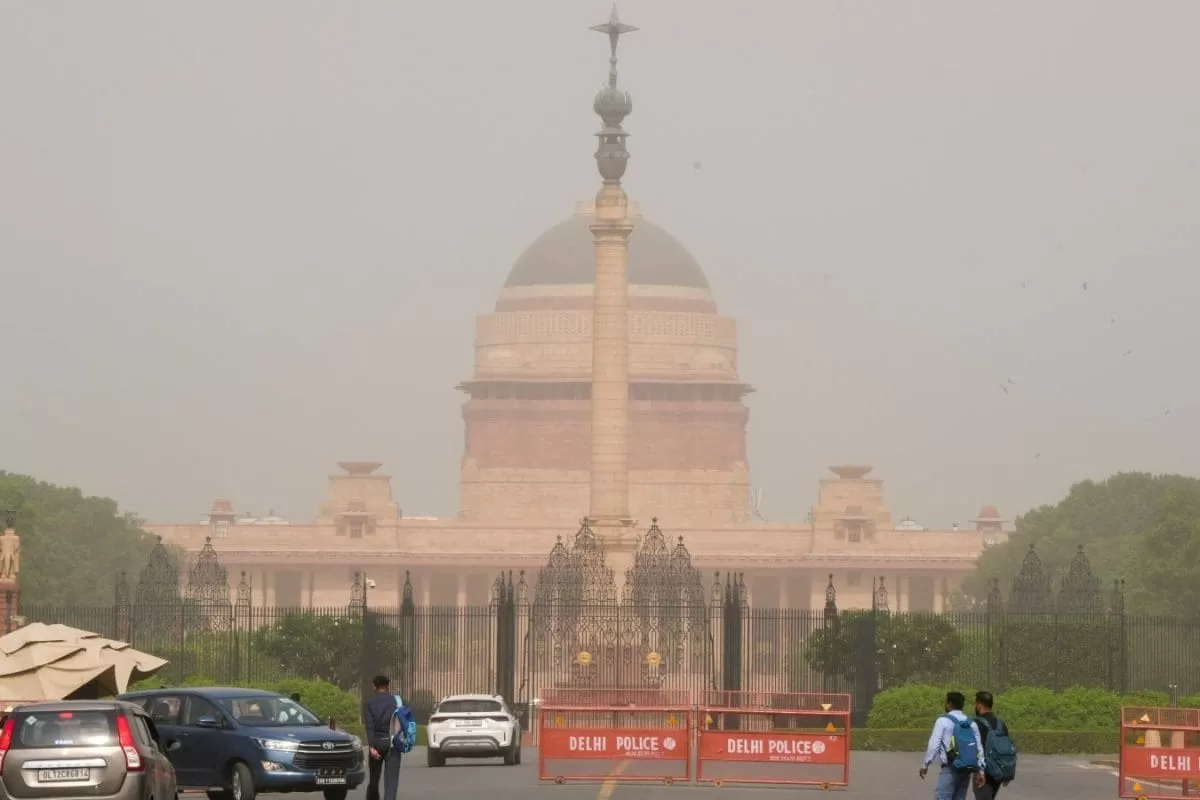
Delhi’s Air Quality Remains In ‘Poor’ Quality For 2nd Consecutive Day, Why AQI Is Rising In Summer
Delhi, the capital city of India, is known for its rich cultural heritage and bustling streets. However, in recent years, it has also gained notoriety for its deteriorating air quality. The city has been battling with severe air pollution for a long time now, and unfortunately, the situation seems to be worsening with each passing day. The latest update on the city’s air quality is that it has remained in the ‘poor’ category for the second consecutive day, with the Air Quality Index (AQI) crossing the 200 mark. This has raised concerns among the citizens and experts, who are trying to understand the reasons behind the rising AQI, especially during the summer season.
The AQI is a measure of the air quality based on the concentration of pollutants present in the air. It ranges from 0 to 500, with higher values indicating higher levels of pollution. An AQI between 0-50 is considered ‘good’, 51-100 is ‘satisfactory’, 101-200 is ‘moderate’, 201-300 is ‘poor’, 301-400 is ‘very poor’, and above 400 is ‘severe’. Sadly, Delhi has been recording AQI levels well above 200, which falls under the ‘poor’ category, for a long time now. This is a matter of great concern, as poor air quality can have severe consequences on the health of the citizens, especially children and the elderly.
One of the main reasons behind the rising AQI in Delhi during the summer season is the increase in the number of vehicles on the road. With the rise in temperature, people tend to use their vehicles more frequently, resulting in increased emissions. The city has a high number of vehicles, and the increase in traffic during the summer season only adds to the already existing pollution levels. The pollution caused by vehicles is a major contributor to the poor air quality in Delhi and needs to be addressed urgently.
Another factor contributing to the rising AQI in Delhi is the dust and particulate matter present in the air. The city is undergoing rapid urbanization, with construction activities taking place in almost every corner. These construction sites generate a significant amount of dust, which, when combined with the hot and dry weather conditions, results in poor air quality. The dust particles in the air not only affect the air quality but also pose a threat to the respiratory health of the citizens.
Apart from these, the burning of crop residue in the neighboring states, especially Punjab and Haryana, also contributes to the rising AQI in Delhi. Every year, farmers in these states burn the remains of their crops to prepare the fields for the next crop cycle. This practice releases a large amount of pollutants into the air, which gets carried to Delhi by the wind. The pollution caused by crop burning is a major concern during the summer season, as the winds are stronger and carry the pollutants over longer distances.
The poor air quality in Delhi is not just a result of one factor, but a combination of various factors. It is a complex issue that requires a multi-pronged approach to tackle it effectively. The government has taken several measures in the past to improve the air quality, such as the implementation of the odd-even rule, banning the use of diesel generators, and introducing CNG-based public transport. However, these efforts have not yielded the desired results, and the city continues to grapple with poor air quality.
It is high time that we, as citizens, take responsibility for our actions and contribute towards improving the air quality in our city. Simple steps like carpooling, using public transport, and avoiding the use of personal vehicles for short distances can go a long way in reducing vehicular emissions. Proper waste management and controlling dust emissions at construction sites can also help in improving the air quality. Additionally, the government needs to take strict measures to curb the burning of crop residue in the neighboring states.
The rising AQI in Delhi during the summer season is a wake-up call for all of us. It is a reminder that we need to take immediate action to protect our environment and our health. The government must also step up its efforts and implement more stringent measures to combat air pollution. It is only through collective efforts that we can hope to see a significant improvement in the air quality of Delhi.
In
