
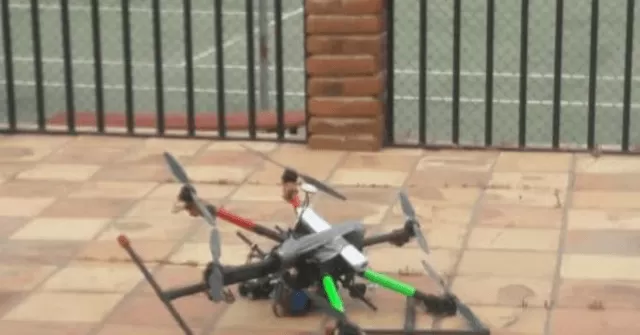
Mexican cartels have long been known for their use of innovative tactics to evade law enforcement and smuggle drugs across the U.S.-Mexico border. However, in recent years, they have taken their tactics to a whole new level by increasingly using drones to replace human scouts in monitoring the activity of U.S. Border Patrol agents along the border.
This new trend has been reported by various sources, including the U.S. Border Patrol and local law enforcement agencies in border states. According to these reports, the use of drones by Mexican cartels has become more prevalent in recent years, and they are now being used to replace the human scouts who were frequently minors.
The use of drones by Mexican cartels is not a new phenomenon. In fact, they have been using them for years to smuggle drugs and other illegal goods across the border. However, their use as a replacement for human scouts is a relatively new development and one that is causing concern among law enforcement agencies.
One of the main reasons for the increase in the use of drones by Mexican cartels is the advancement of technology. Drones are now more affordable and easier to use than ever before, making them an attractive option for the cartels. They are also more difficult to detect and can cover a larger area in a shorter amount of time compared to human scouts.
The use of drones by Mexican cartels has also become more sophisticated. They are now equipped with advanced cameras and sensors, which allow them to gather real-time information and transmit it back to the cartels’ headquarters. This information is then used to coordinate drug trafficking operations and to avoid detection by law enforcement.
The use of drones by Mexican cartels has also proven to be more cost-effective for them. In the past, they would have to pay human scouts to monitor the activity of Border Patrol agents, which was not only expensive but also put the lives of these minors at risk. With drones, they can now gather the same information at a fraction of the cost and without putting anyone’s life in danger.
The use of drones by Mexican cartels is a significant concern for U.S. Border Patrol agents. Not only does it make their job more challenging, but it also puts their safety at risk. Drones can be used to gather information on the agents’ movements and locations, making them vulnerable to attacks by the cartels.
Moreover, the use of drones also allows the cartels to stay one step ahead of law enforcement. They can quickly adapt and change their routes and methods of smuggling to avoid being caught. This makes it even more challenging for Border Patrol agents to intercept their illegal activities.
The increase in the use of drones by Mexican cartels is also a cause for concern for the safety of civilians living in border communities. Drones can easily fly over residential areas, posing a threat to the privacy and security of these communities. They can also be used to transport weapons and other illegal goods, putting the safety of innocent civilians at risk.
In response to this growing threat, the U.S. Border Patrol has increased its use of technology to combat the use of drones by Mexican cartels. This includes the use of advanced radar systems and specialized training for agents to detect and intercept drones. However, it is a constant battle, as the cartels continue to find ways to evade detection.
In conclusion, the use of drones by Mexican cartels to replace human scouts is a concerning trend that is on the rise. It not only poses a threat to the safety of law enforcement agents but also to the general public. The advancement of technology has made it easier and more cost-effective for the cartels to use drones, and it is up to law enforcement agencies to stay one step ahead and find ways to combat this new tactic. The safety and security of our borders and communities depend on it.
