
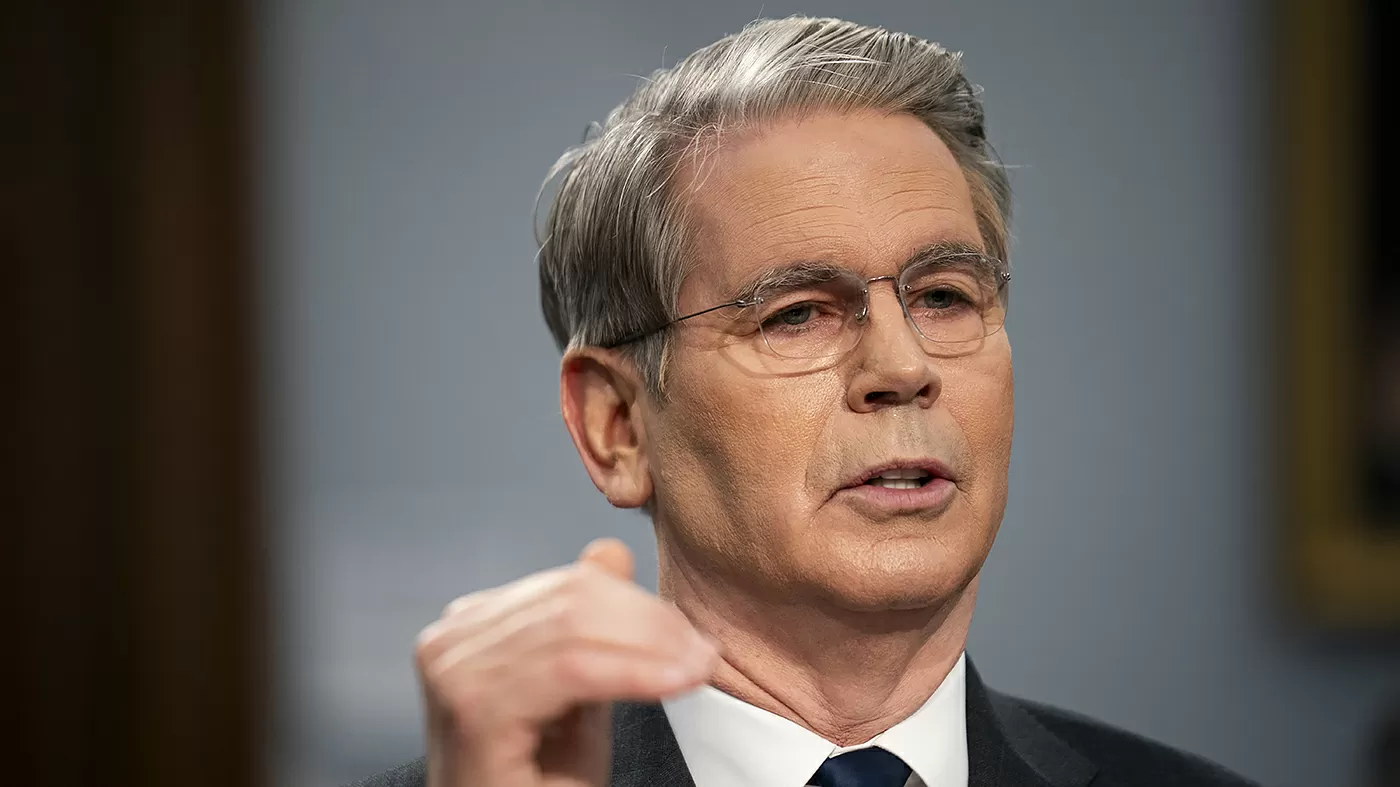
Treasury Secretary Scott Bessent urged Congress on Friday to take immediate action and raise the nation’s debt ceiling by mid-July, warning of the catastrophic consequences if no action is taken. Bessent’s call for action comes as the federal government’s debt reaches a staggering $36 trillion, with the possibility of default looming large.
In a letter addressed to House Speaker Mike Johnson (R-La.), Bessent emphasized the urgency of the situation and the need for swift action. He stated, “There is a reasonable probability that the government’s cash and extraordinary measures will be exhausted in the next few months,” and stressed that failure to raise the debt ceiling could have devastating effects on the nation’s economy.
The debt ceiling, which sets a limit on the amount of money the government can borrow to fund its operations, has been a hotly debated topic in recent years. The current limit of $22 trillion was set in 2019 and has been temporarily suspended since then, allowing the government to continue borrowing money to meet its financial obligations. However, that suspension is set to expire on July 31, and if the ceiling is not raised by then, the government will be forced to default on its debt.
Bessent’s letter comes as a stark reminder of the consequences that can follow if Congress fails to act. In the letter, he warned that a default on the debt would have a severe impact on the nation’s credit rating, leading to higher interest rates, inflation, and a decline in the value of the U.S. dollar. This could also result in a loss of confidence in the U.S. economy, both domestically and internationally, causing significant damage to our financial stability.
Furthermore, a default on the debt would also have a ripple effect on the average American. It would lead to a reduction in government services, increase in taxes, and possibly even delay Social Security and Medicare payments. Moreover, it could also lead to a decrease in job opportunities and a decline in the stock market, negatively impacting retirement savings and investments.
Bessent’s call for action has been supported by many, including financial experts and leaders from both sides of the political spectrum. They believe that the consequences of a default on the debt are too severe to ignore and that raising the debt ceiling is a crucial step in maintaining the stability of the nation’s economy.
In his letter, Bessent also highlighted the fact that raising the debt ceiling does not mean increasing government spending. It simply allows the government to continue paying for the services and programs that have already been approved by Congress. It also gives the government the ability to continue borrowing money to meet its financial commitments and avoid default.
Therefore, the responsibility falls on Congress to act swiftly and raise the debt ceiling before the deadline. Failure to do so would not only harm the nation’s economy but also damage the trust and credibility of the United States in the global market.
The good news is that there is bipartisan support for raising the debt ceiling, with many lawmakers acknowledging the urgency of the situation. It is now up to them to put aside political differences and work together towards a solution that benefits the nation as a whole.
In conclusion, Treasury Secretary Scott Bessent’s call for Congress to raise the debt ceiling is a wake-up call for immediate action. The consequences of a default on the debt are too severe to ignore, and it is the responsibility of our elected officials to put the nation’s interests first and take the necessary steps to avoid a financial crisis. As citizens, we must also urge our representatives to act swiftly and responsibly in this matter to ensure the stability and prosperity of our nation’s future.
