
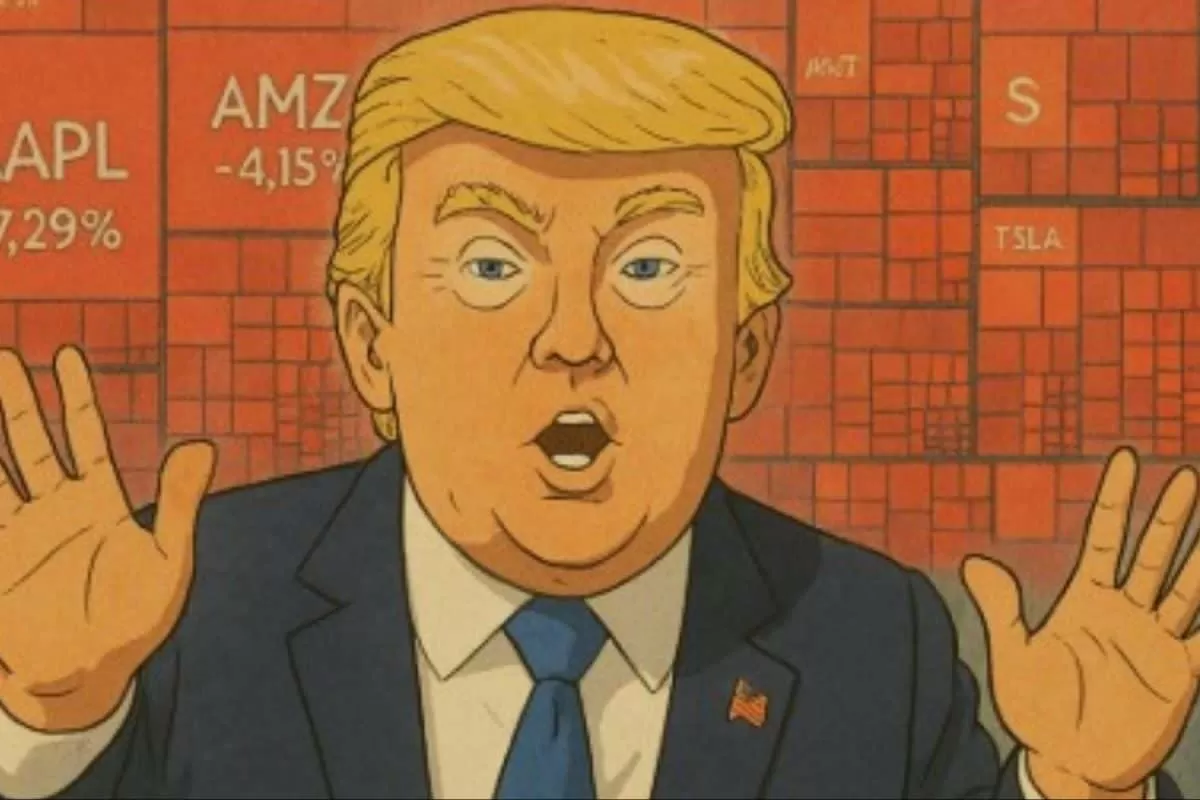
Global markets were sent into a frenzy on Monday as fears of a looming recession gripped investors. The sudden drop in stock prices triggered a wave of viral memes, with many dubbing the crash ‘Orange Monday’ in reference to US President Donald Trump’s controversial policies.
The chaos began when Trump announced plans to impose tariffs on a wide range of Chinese goods, further escalating the ongoing trade war between the two economic giants. This move was met with widespread concern and uncertainty, as many experts warned of potential economic fallout.
As a result, major stock indexes around the world saw significant declines, with the Dow Jones Industrial Average falling by over 600 points, the S&P 500 dropping by 2.3%, and the Nasdaq Composite tumbling by 3.4%. The European and Asian markets also took a hit, with the FTSE 100 in London and the DAX in Germany both experiencing significant drops.
The situation was compounded by Trump’s unwavering stance on the tariffs, despite growing pressure from both domestic and international leaders to reconsider. This only added to the already tense atmosphere, as investors braced themselves for a potential economic downturn.
In the midst of this chaos, social media was flooded with memes and jokes about the market crash, with many poking fun at Trump and his ‘Orange Monday’ tariffs. While these memes provided some comic relief, they also highlighted the widespread concern and uncertainty surrounding the situation.
The term ‘Orange Monday’ quickly gained traction and became a trending topic on various social media platforms. Many users shared their own versions of the meme, using images of Trump’s face superimposed on orange fruits or referencing his infamous tan. Others used the hashtag #OrangeMonday to express their frustration and disappointment with the situation.
Despite the humorous tone of these memes, the underlying message was clear – the market crash and potential recession were no laughing matter. The impact of these events could have serious consequences for the global economy and people’s livelihoods.
In the face of this uncertainty, experts and analysts urged investors to remain calm and not make any impulsive decisions. They emphasized the importance of long-term investments and diversifying portfolios to mitigate potential risks.
On the other hand, some experts saw this market dip as a buying opportunity, as stock prices became more attractive. They advised investors to take advantage of the lower prices and invest in strong, stable companies that are likely to weather the storm.
While the situation may seem grim, it’s important to remember that the stock market is known for its volatility. Market crashes and recessions are not uncommon, and the economy has always bounced back in the past. As long as investors remain level-headed and make informed decisions, they can weather this storm and come out stronger on the other side.
Moreover, it’s worth noting that the global economy has shown resilience in the face of various challenges in the past. From natural disasters to political turmoil, the economy has always found a way to recover and continue growing. This gives us hope that it will do the same in the current situation.
In the midst of the chaos and uncertainty, it’s important to focus on the positive aspects. Despite the market crash, the global economy has been performing well in recent years, with low unemployment rates and steady growth. This provides a strong foundation for recovery and growth in the future.
Furthermore, the current situation also presents an opportunity for world leaders to come together and find a resolution to the ongoing trade war. By working towards a mutually beneficial solution, they can help ease tensions and restore confidence in the market.
In conclusion, while the global markets may have plunged amid fears of a recession and ‘Orange Monday’ may have become a viral meme, it’s important to remain positive and optimistic. By making informed decisions and focusing on the long-term, we can weather this storm and come out stronger. Let’s not forget that the global economy has overcome challenges before and it will do so again.
